
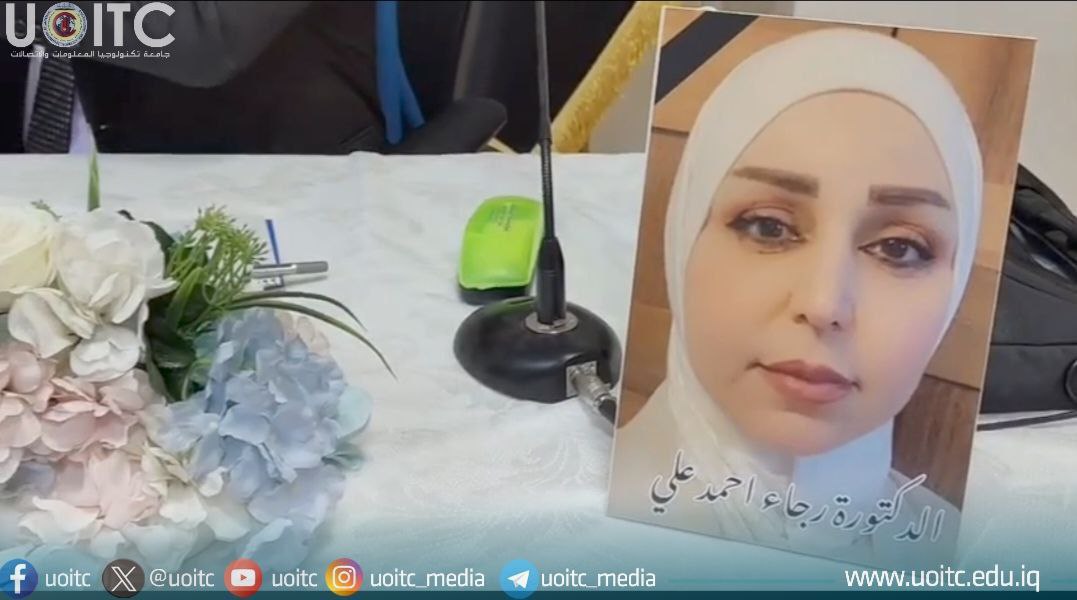
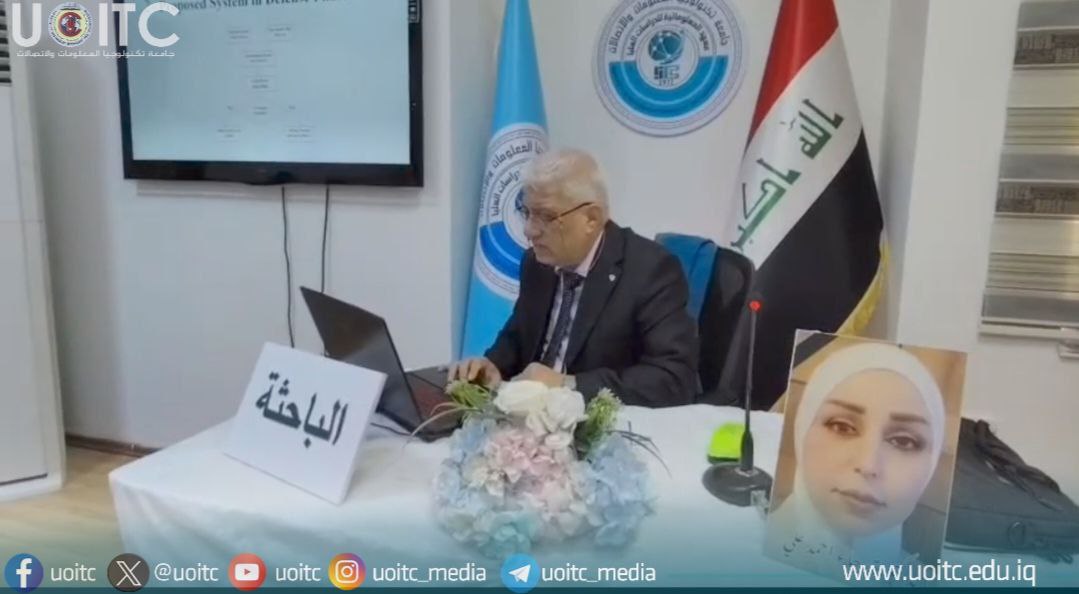
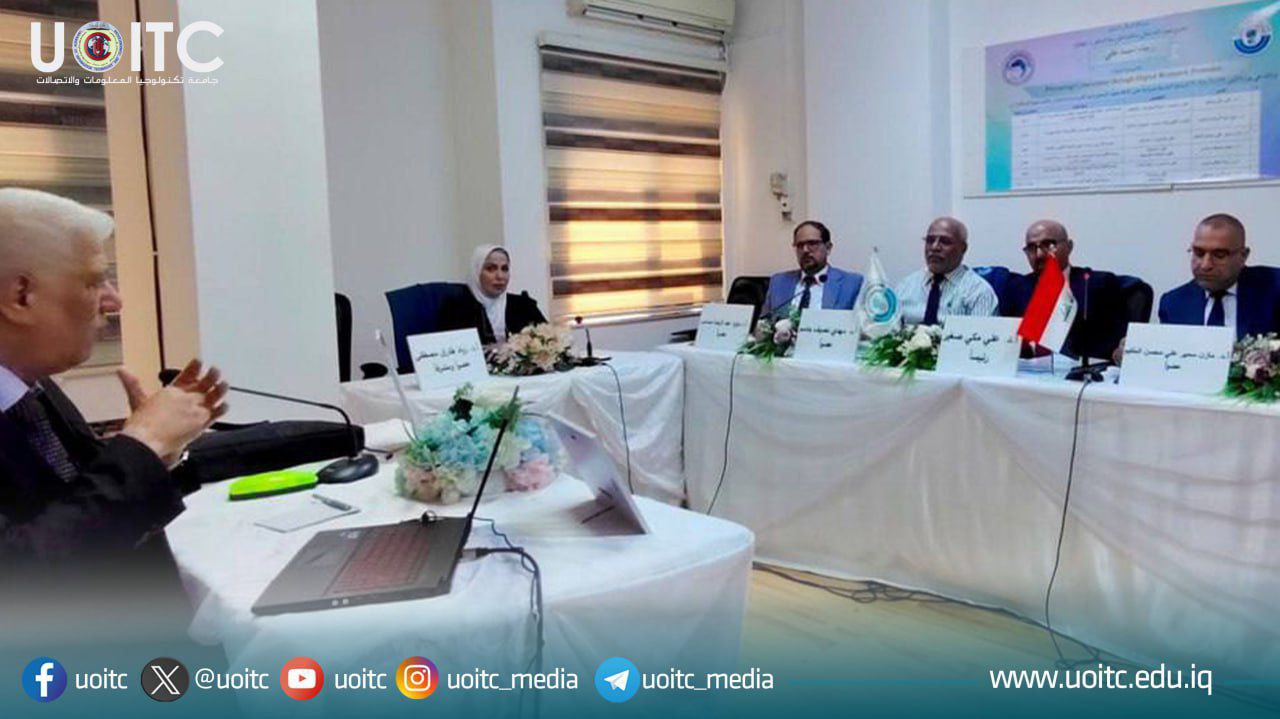
The Informatics Institute for Postgraduate Studies at the University of Information Technology and Communications organized a public discussion session for the thesis of the late doctoral student (Raja’a Ahmed Ali), who passed away before the date of her thesis defense, and the session was attended by a specialized scientific committee and a number of the student’s relatives and colleagues.
This humanitarian and scientific initiative came in appreciation of the efforts of the late student, who completed all chapters of her thesis, entitled (Preventing Cybercrimes through Digital Biometrics Forensics), and produced solid scientific results before her death.
The Dean of the Institute, Prof. Dr. Suha Muhammad Hadi, opened the discussion with words mixed with sadness and tears for the deceased (Raja’a Ahmed Ali), offering thanks and gratitude to His Excellency the Minister of Higher Education and Scientific Research, Dr. Na’eem Al-Aboudi, and the Director of the Research and Development Directorate, Dr. Lubna Khamees, as His Excellency approved granting a full discussion to a Postgraduate student who had completed the discussion requirements and issued the administrative order and passed away, in recognition of the efforts of Postgraduate students.
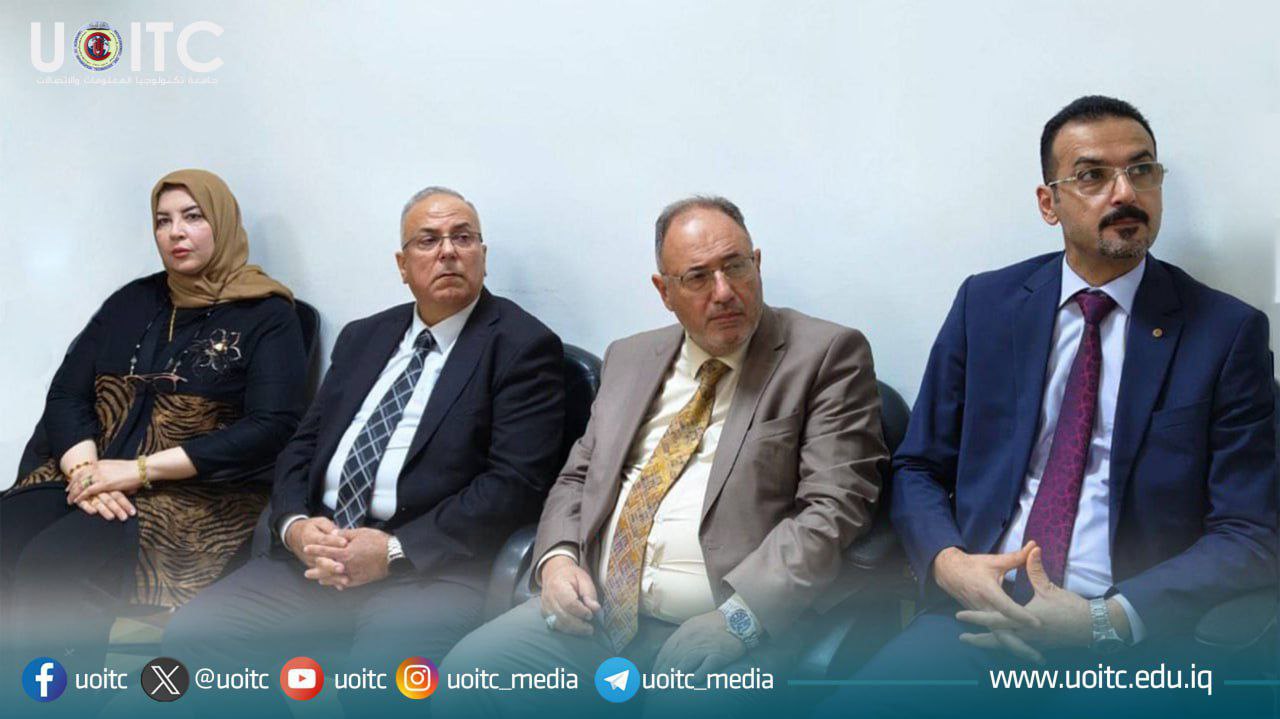
The late student’s thesis was discussed at the University of Information Technology and Communications, and her supervisor, Prof. Dr. Ziad Tareq Mustafa, represented her, under the patronage and attendance of the President of the University, Prof. Dr. Abbas Mohsen Al-Bakri, his scientific assistant, Asst. Prof. Dr. Haider Hassan Mshali, the Dean of the College of Computer Science at the University of Diyala, and a number of faculty staff, in addition to the head and members of the discussion committee, namely, the head of the committee, Prof. Dr. Ali Makki Al-Sagheer, and the membership of Prof. Dr. Mahdi Nsaief Jassem, Prof. Dr. Mu’ayyad Abdul-Ridha Saheb, Prof. Dr. Mazen Sameer Al-Hakeem, and Asst. Prof. Dr. Raja’a Kadhum Hassoun.
The Dean of the Institute emphasized that this discussion is a precedent with a humanitarian and academic dimension, indicating that Iraqi universities have always adopted this noble tradition of granting honorary degrees to students who have completed their academic requirements and passed away before the discussion, in recognition of their efforts and role in supporting scientific research, however, this is the first time, and based on ministerial instructions, it is considered an official discussion that entails all administrative entitlements.
For their part, the members of the discussion committee explained that this step stems from two dimensions: one academic, to provide a valuable study for the academic library, and the other ethical, to honor a diligent researcher who has been missed by the academic community, and they emphasized that the discussion of the thesis of “The Absent, Yet Present,” was a tribute to her scholarly contributions and a way to repay the University’s gratitude.