
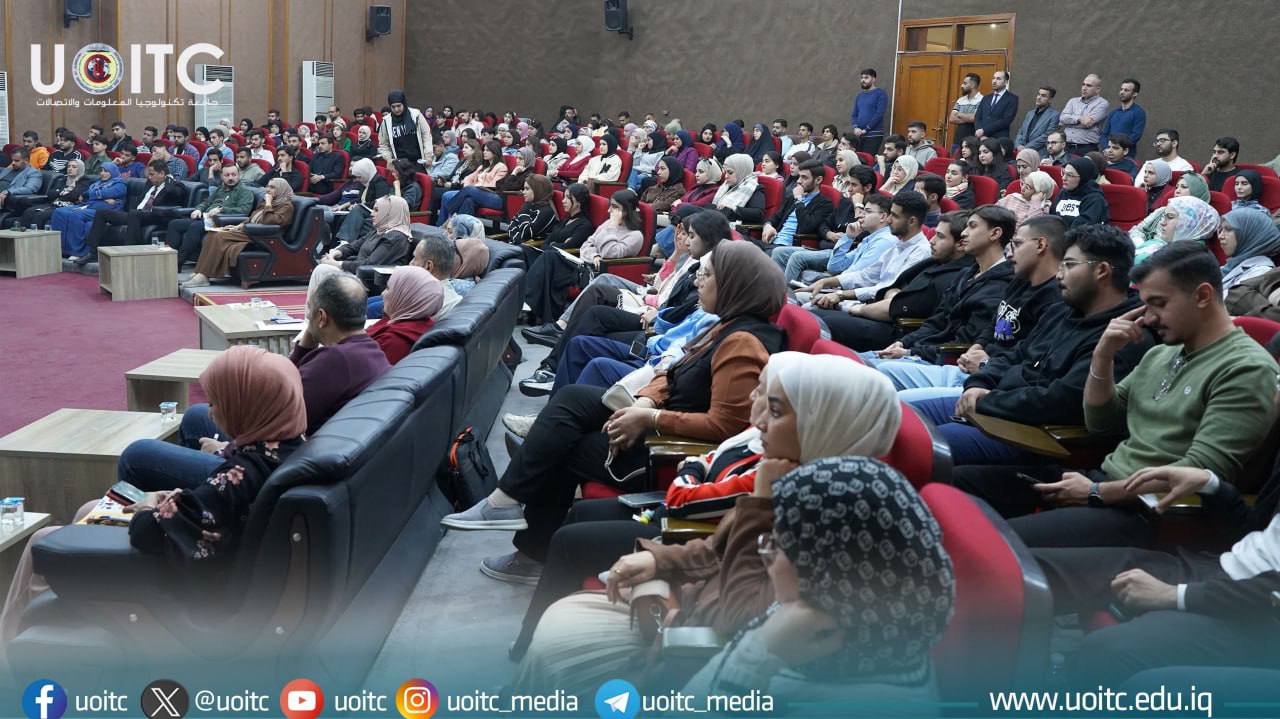



As part of the activities of the Iraqi Anti-Drug Week, the Psychological Counseling Unit at the College of Business Informatics organized an awareness seminar titled “The Dangers of Drug Abuse and Its Health Effects,” in cooperation with the National Security Service / University Security Directorate.
One of the staff members of the National Security Service / University Security Directorate delivered the seminar, during which he reviewed the most prominent health and social risks associated with drug abuse. He emphasized that Iraq has become surrounded by drug-producing areas, which has contributed to its shift from being merely a transit route to becoming a consumer market in recent years.
The seminar included a presentation of several 2024 security statistics regarding seizure operations, the number of individuals accused of trafficking and possession, as well as the quantities of drugs seized and confiscated. It also highlighted the number of individuals who were rehabilitated and reintegrated into society after undergoing treatment and rehabilitation programs.
The seminar also addressed the reasons behind the spread of drugs in Iraqi society, the most prominent of which are the lack of public awareness due to the newness of the phenomenon, weak religious deterrence, innovative promotion methods, extensive exposure to social media platforms, limited awareness campaigns, unemployment, and insufficient cooperation between citizens and the relevant security agencies.
The lecturer also discussed the types of narcotic substances in terms of their origin and effects, explaining that some are natural, such as marijuana, while others are synthetic substances with far more dangerous effects. He also clarified that addiction develops gradually, starting with experimentation and ending with complete dependence on the drug.
The seminar concluded with the screening of a video showing the efforts made by the National Security Service in combating this scourge, in addition to emphasizing the importance of following preventive programs to protect young people from the dangers of drug abuse.