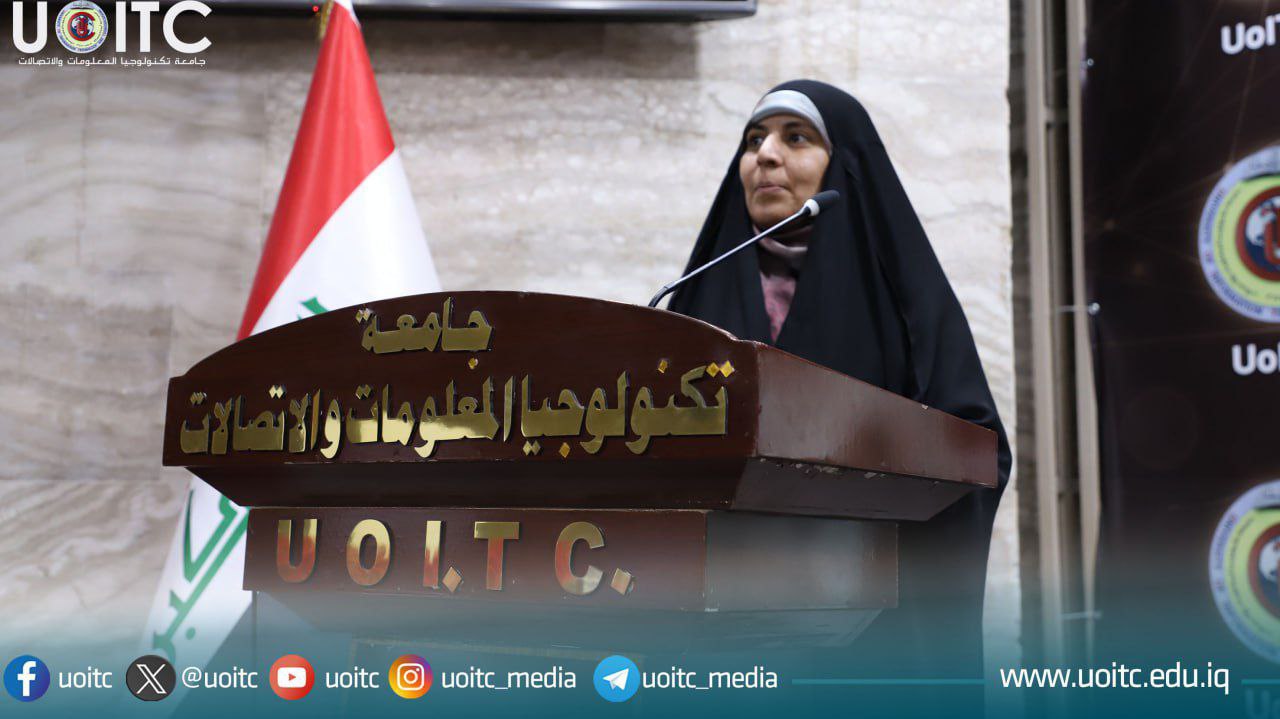
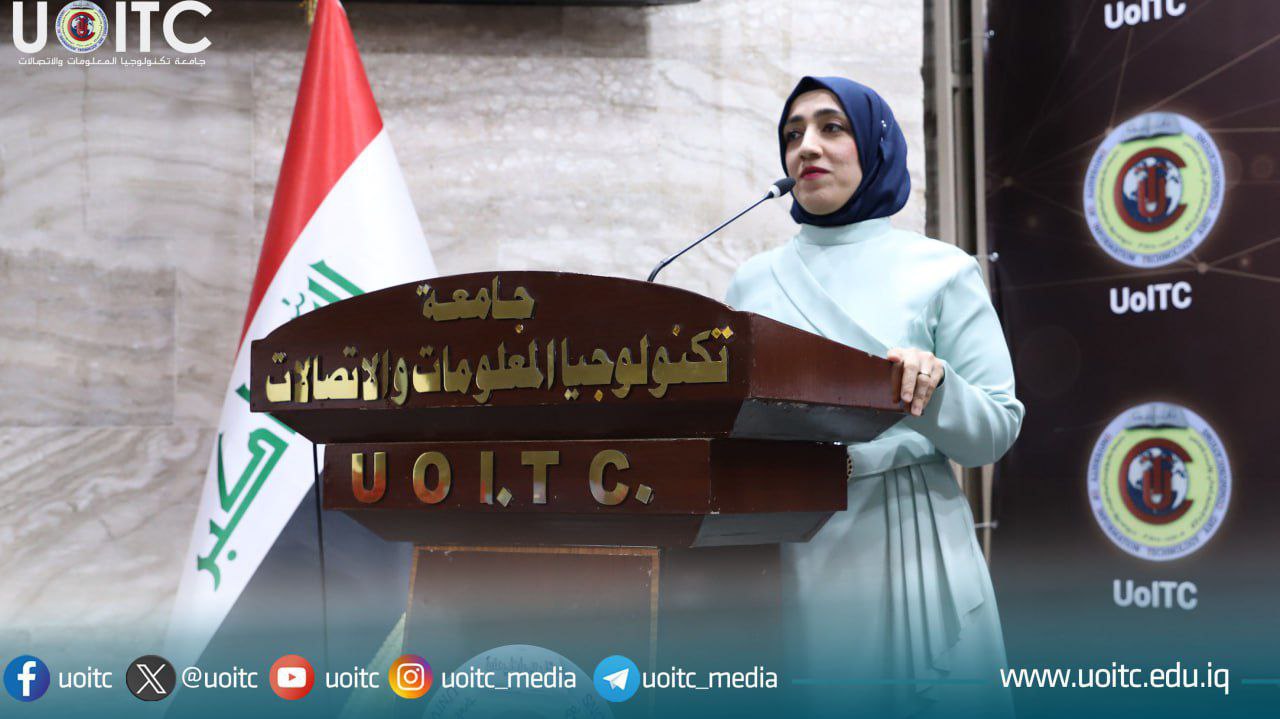
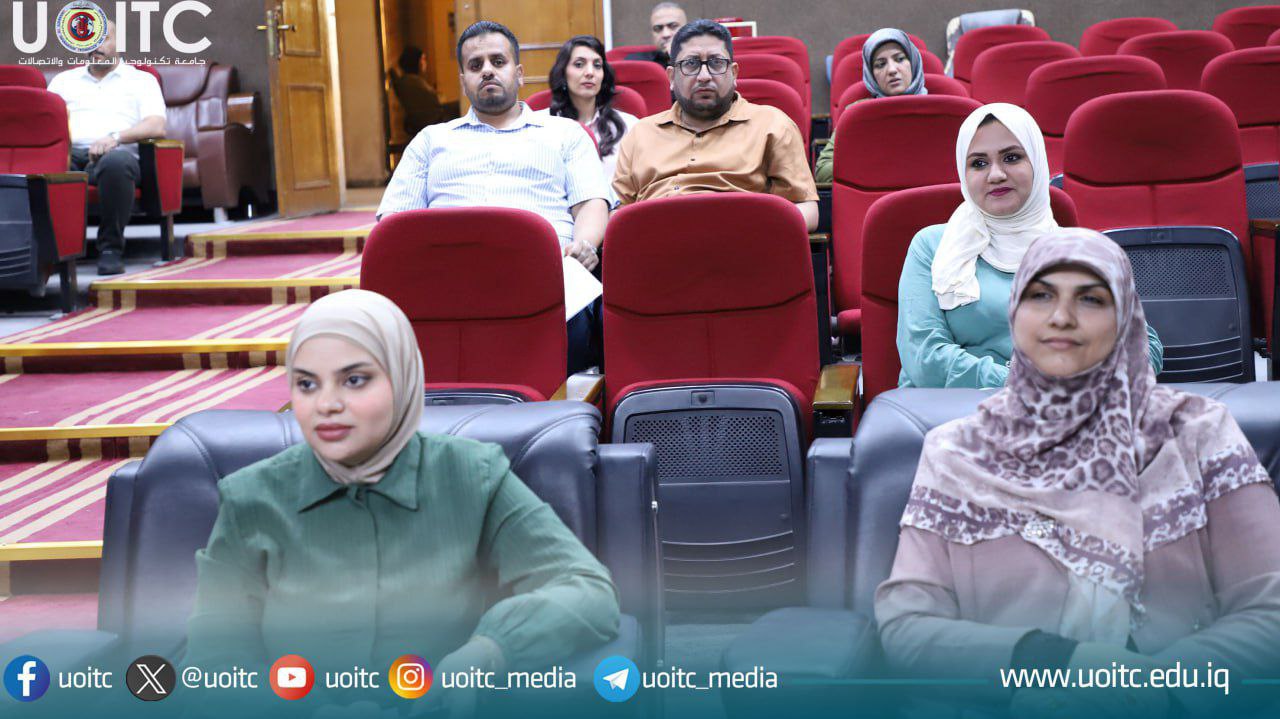
The Center for Continuing Education, in cooperation with the Department of Legal Affairs and the Department of Administrative and Financial Affairs at the University of Information Technology and Communications, held a seminar titled “Linguistic Security in Iraq: Challenges and Prospects” as part of the implementation of the National Strategy for Higher Education for the month of October.
The seminar was presented by the lecturers: Assistant Lecturer Sabrin Ghalib Kazem and Assistant Lecturer Israa Jawad Ali Akbar. The seminar addressed the concept of linguistic security as one of the pillars of national identity and cultural sovereignty. It focuses on preserving the Arabic language and protecting it from erosion, extinction, and external influences resulting from globalization and cultural invasion.
The lecturer explained that linguistic security represents a safeguard for identity and national belonging, and contributes to strengthening social unity and cohesion. She pointed out that the weak use of Modern Standard Arabic in educational and media institutions, along with the widespread use of dialects and foreign terms, is among the most significant challenges Iraq faces in this field.
The seminar also addressed the negative consequences of the decline in linguistic security, including weakened national identity, declining quality of education, and a loss of connection with Arab literary and intellectual heritage. It emphasized the importance of adopting language policies that help protect the Arabic language as a symbol of culture, history, and identity.
In conclusion, the seminar stressed the need to develop Arabic language curricula to make them more interactive and engaging, and to encourage media and cultural programs that focus on promoting linguistic integrity and enhancing the status of the Arabic language in society.