
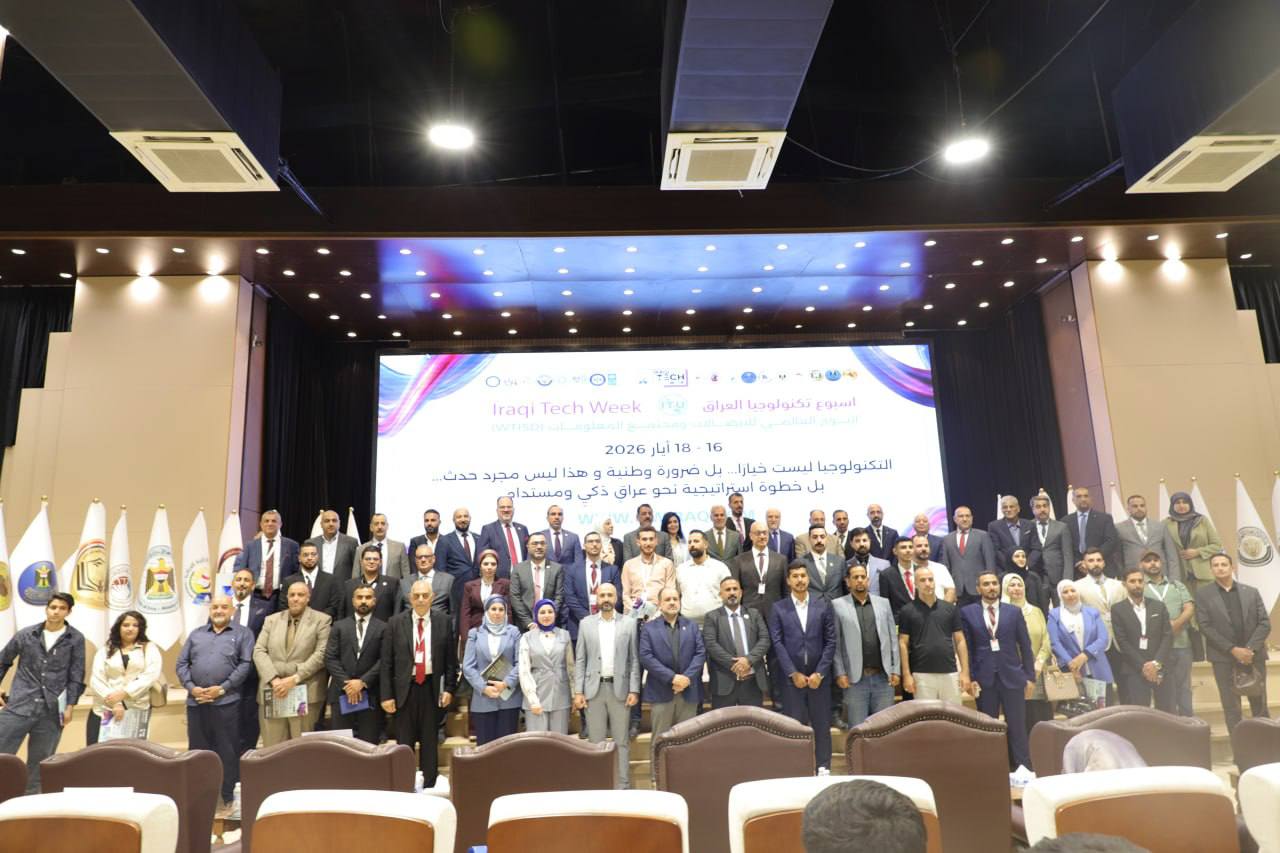
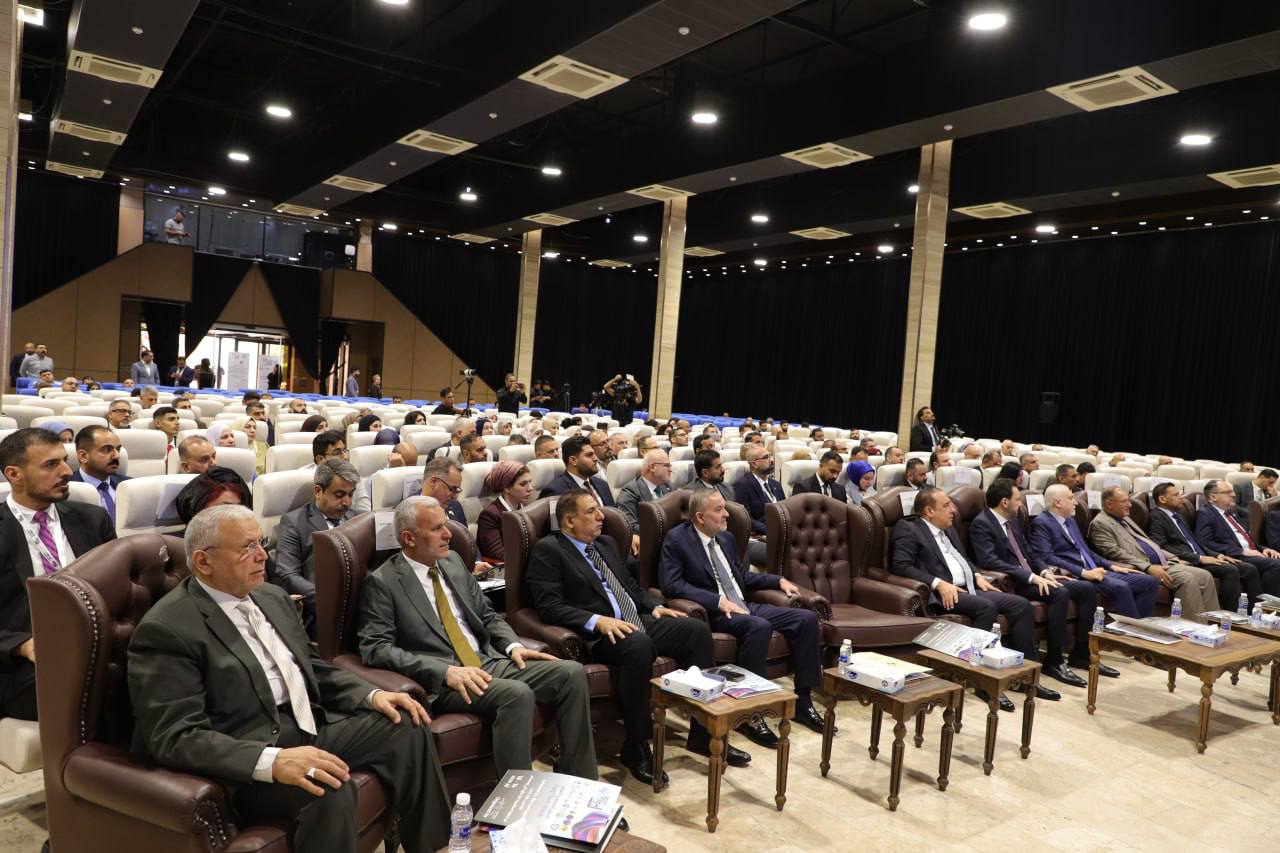
Under the slogan “Technology is not an option, but a national necessity,” and based on a vision that believes digital transformation represents a strategic step towards building a smart and sustainable Iraq, the University of Information Technology and Communications, in cooperation with government institutions and private sector companies and with the support of international and local organizations, organized the 10th Iraq Technology Week and Information Society Forum.
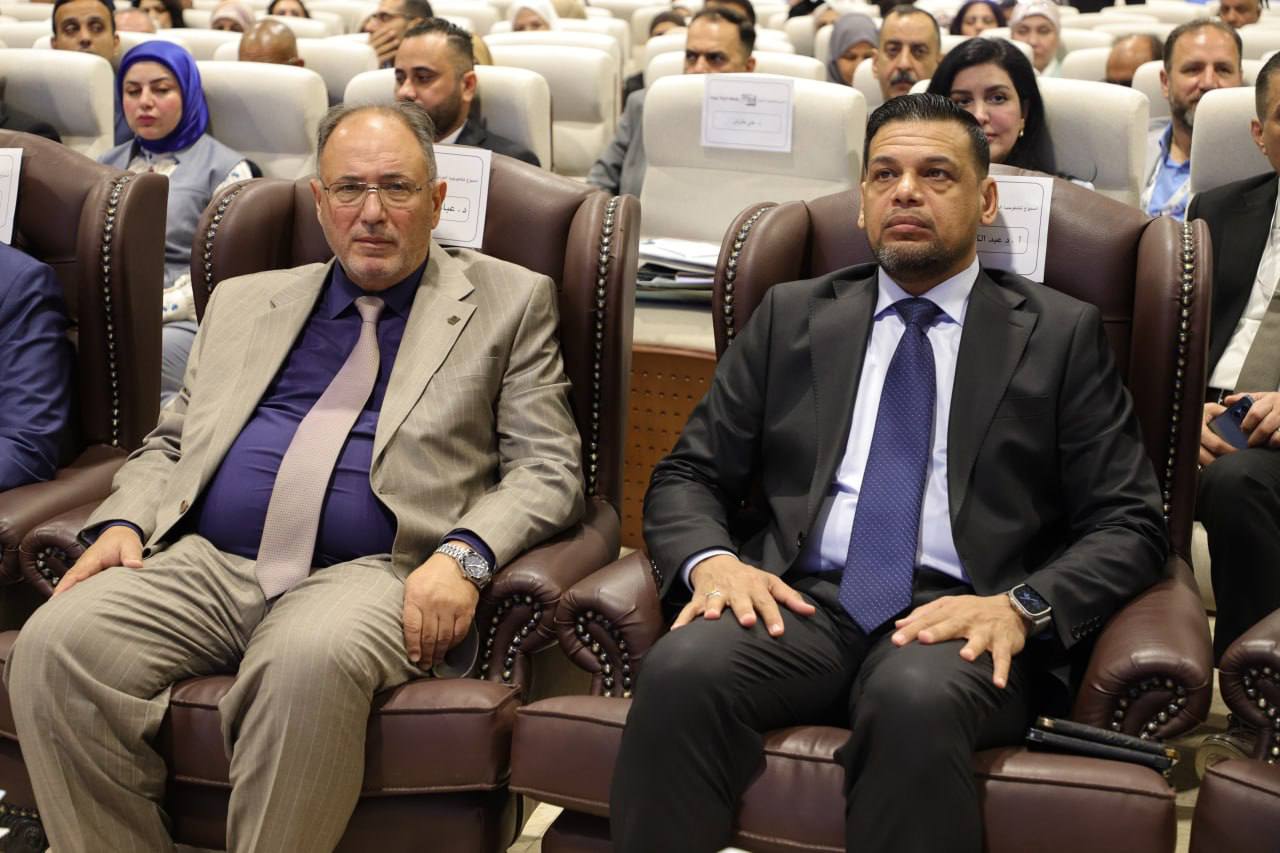
The forum witnessed wide local and international participation. It began with a speech by the President of the University of Information Technology and Communications, Professor Dr. Abbas Mohsen Al-Bakri, followed by a speech by the representative of the International Telecommunication Union, Dr. Cosmas Zava-Zava, Director of the Telecommunication Development Bureau, and then a speech by the member of the Transportation, Communications, and Governance Committee in the Iraqi Parliament, Engineer Thaer Al-Azzawi. The Undersecretary of the Ministry of Trade for Economic Affairs, Mr. Ghassan Farhan, delivered the ministry’s address, followed by the President of the Federation of Iraqi Chambers of Commerce, Mr. Amer Khalaf Alawi, and then the member of the Board of Commissioners of the Media and Communications Commission, Mr. Ahmed Raouf Al-Hassani. The speeches concluded with a speech by the President of the International Chamber of Commerce in Iraq, Mr. Mohsen Al-Humaid.
The speeches emphasized the importance of adopting legislation and laws that support the digital transformation process, expanding the scope of digital services for citizens, and leveraging information and communication technology (ICT) applications in e-commerce, artificial intelligence, digital solutions, and smart city development to contribute to achieving sustainable development.
Following the opening session, the dialogue sessions of Iraq Technology Week (ITW) commenced. The first session, titled “The Future of the ICT Sector in Iraq,” addressed the themes of digital transformation, artificial intelligence, digital financial services, and the prospects for developing Iraq’s technological infrastructure.
The session was moderated by Engineer Sinan Abu Al-Eis, Head of the Private Sector Committee at the Iraqi Engineers Syndicate, with the participation of a select group of experts: Dr. Yama Turabi from the United Nations Development Programme (UNDP), Dr. Ali Tarish, Assistant Dean of the Institute of Informatics for Postgraduate Studies at the University of Information Technology and Communications, Dr. Raghad Al-Shahbandar, Director of the National Center for Artificial Intelligence, Engineer Osama Hussein Malik, Director of the Digital Solutions and Services Department at the Central Bank of Iraq, and Mr. Hani Khalil, Director of the Digital Transformation Department at the National Bank of Iraq.
The session featured rich discussions that emphasized the importance of integration between the public and private sectors in building a sustainable digital future and fostering an environment of innovation and technological development in Iraq.
The second session, titled “Applications of the Information and Communications Technology Sector in Iraq,” was moderated by Professor Dr. Mazen Al-Hakim, Vice President of the Iraqi Programmers Syndicate. Participants included Engineer Waseem Khalil Al-Sarraj, Director of the Service Quality and Spectrum Monitoring Department; Dr. Laith Mohammed Fawzi, Director of the Information and Communications Technology Research Center at the Scientific Research Authority; Ms. Marwa Ali Hamad, Director of the Artificial Intelligence Division at the General Company for Exhibitions and Commercial Services; Dr. Hussein Rahman Al-Fadhli, a member of the Iraqi Information and Communications Technology Association; and Dr. Falah Al-Lami, President of the Iraqi Computer and Information Technology Association.
These events, sponsored by Digital World International, are part of an effort to support digital transformation initiatives and strengthen partnerships between academic institutions, government agencies, the private sector, and international organizations. This aims to contribute to the development of the information and communications technology sector in Iraq and to solidify the concepts of the digital economy and sustainable development.