
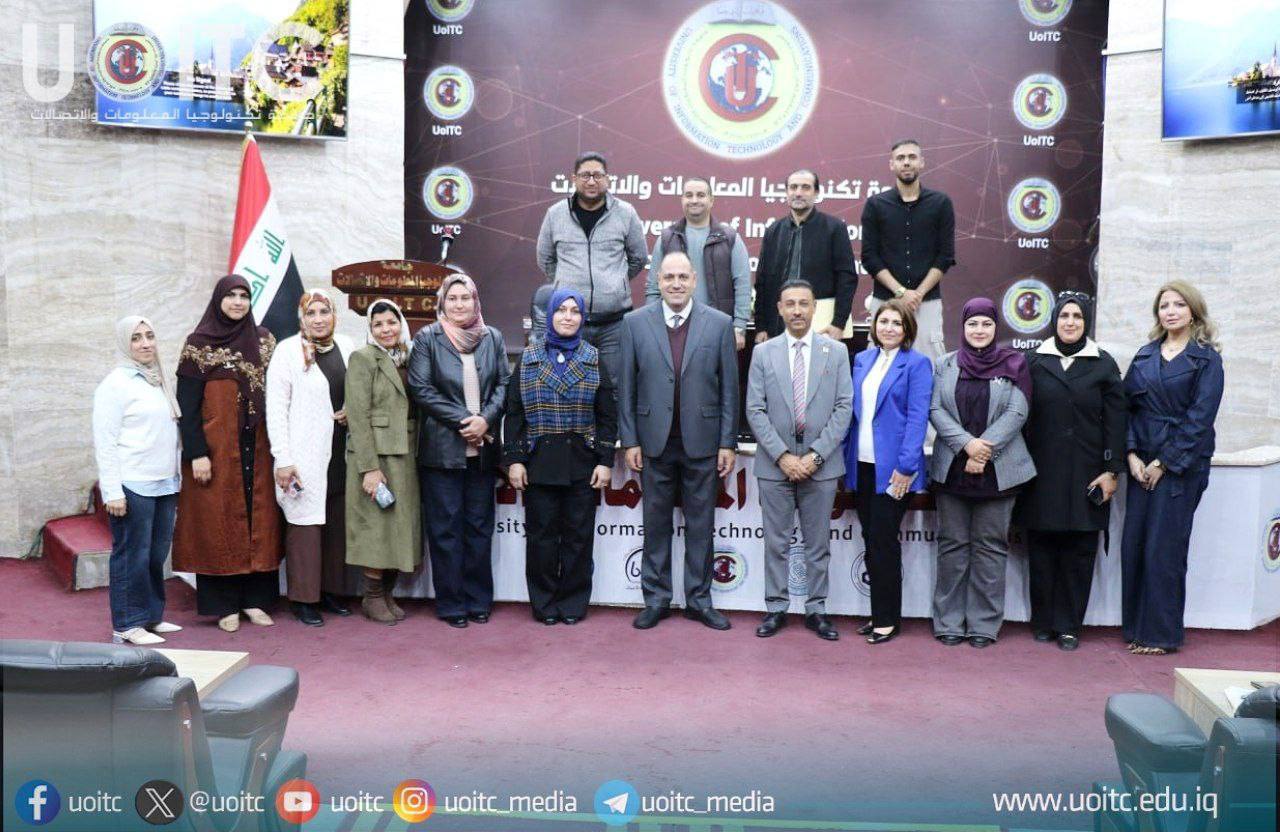
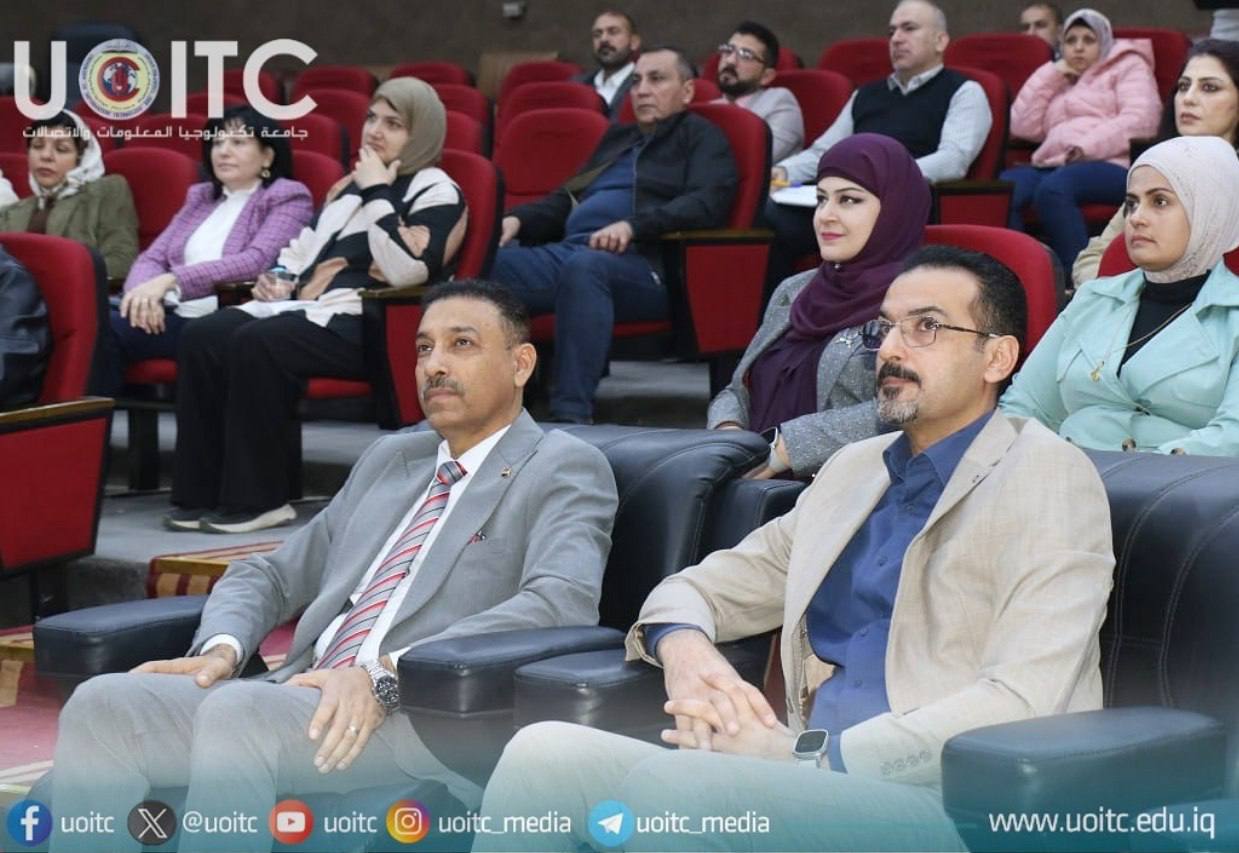
The Department of Scientific Affairs, in cooperation with the Council Secretariat Division at the University of Information Technology and Communications (UoITC), organized a specialized scientific seminar entitled “Your Guide to Successful Academic Publishing.”
The seminar was delivered by Prof. Hasanein Faisal Ghazi from Al-Bayyan University and attended by the University’s Scientific and Administrative Vice Presidents, along with a group of faculty members, researchers, and those interested in scholarly publication.
In his lecture, Prof. Ghazi highlighted the importance of academic publishing for academics, noting that research publication constitutes a fundamental pillar in sharing knowledge with others and expanding the researcher’s impact within the academic community. He further emphasized its role in enhancing scientific reputation and improving academic performance evaluations, ultimately contributing to academic promotion.
The lecturer also shed light on the various types of scholarly journals, explaining that publication generally falls into two categories: Open Access journals and Closed Access journals. He noted that the quality of a journal is determined by several factors, including its publishing house, the presence of an impact factor, indexing in reputable international databases, the rigor of its peer-review process, and its acceptance and rejection rates.
Prof. Ghazi also outlined the differences between journals indexed in global databases—such as Scopus—and reputable non-indexed journals that still adhere to the ethics of academic research in receiving, evaluating, and publishing manuscripts.
He also provided a detailed explanation of predatory and hijacked journals and the risks associated with publishing in them, particularly the damage they can inflict on a researcher’s academic reputation and scholarly credibility.
The speaker further addressed mechanisms of publishing with international publishing houses and the services they offer to researchers. He also discussed key databases relied upon by universities, such as Digital Commons, owned by Elsevier, which hosts approximately 42 scientific journals. He outlined proper methods for verifying journal quality and distinguishing between indexed journals and suspicious ones, stressing the necessity of using official databases to ensure the integrity of the academic publishing process.
In the end of the seminar, the University’s Administrative Vice President, Prof. Jaafar Athab Angoud, presented a certificate of appreciation to the speaker in recognition of his efforts in supporting the academic mission of the university.