
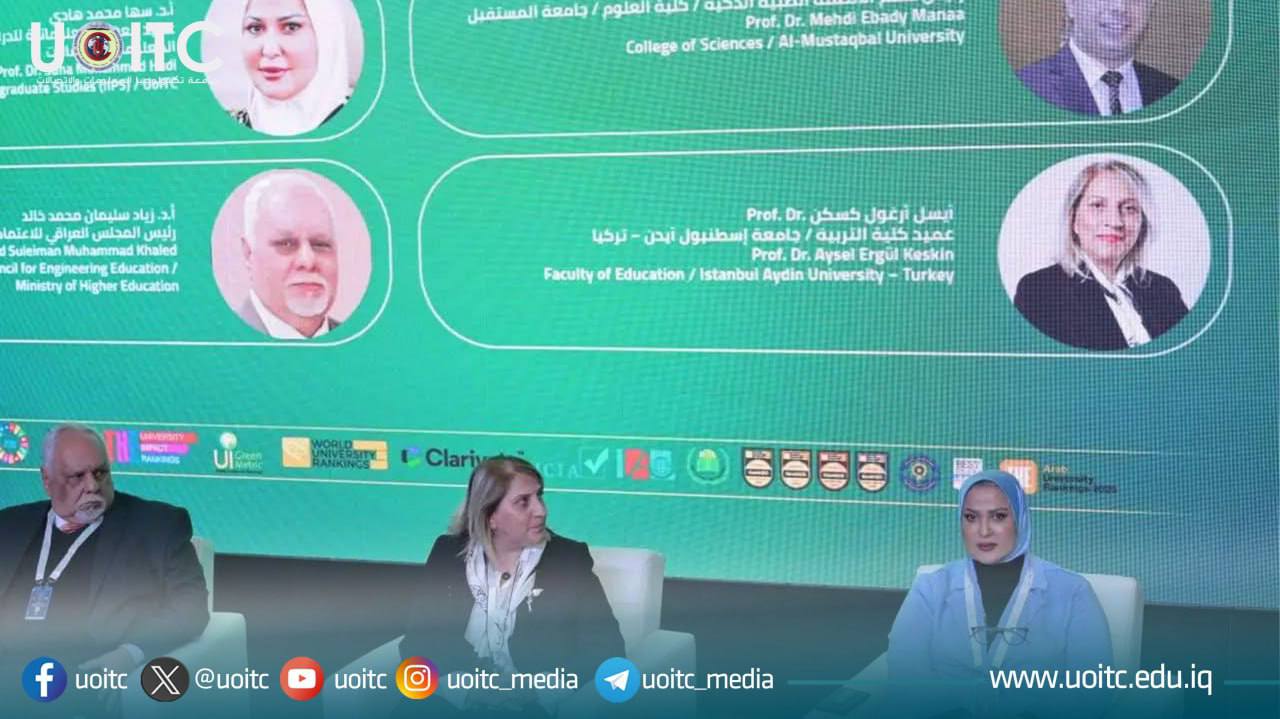
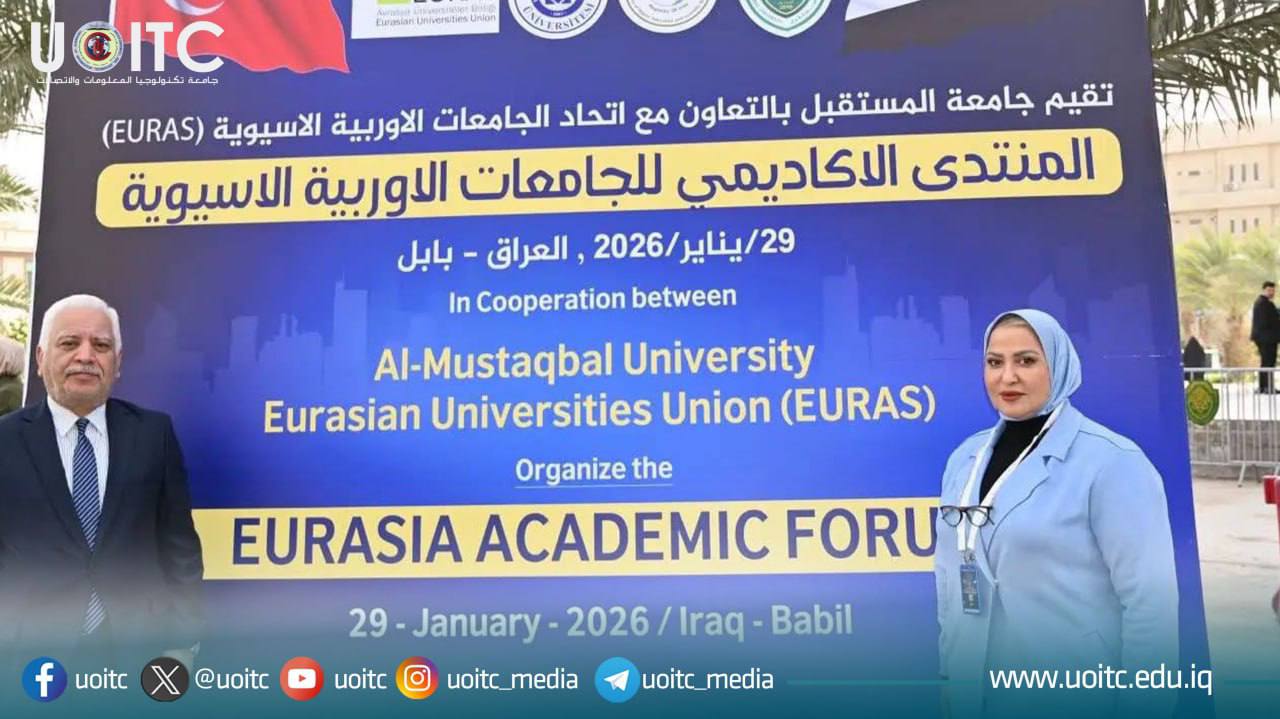
The delegation of the University of Information Technology and Communications, consisting of the vice chancellor for scientific affairs , Dr. Haider Hassan Mashali, the Dean of the Institute of Informatics for Postgraduate Studies, Professor Dr. Suha Muhammad Hadi, and a number of professors, participated in the activities of the EURAS Academy International Forum, which was organized by Future University in cooperation with the Association of European–Asian Universities (EURAS), with wide participation from local and international academic institutions.
The forum, titled “Quality, Sustainability, and Global Partnerships: The Transformation of Higher Education in the Middle East and North Africa Region,” was an international scientific event organized for the first time in Iraq. It aims to discuss the future of higher education in light of digital transformations and the requirements of quality and sustainability.
The Dean of the Institute gave a presentation entitled «Digital Transformation and the Use of Artificial Intelligence in Supporting Quality Systems in Iraqi Universities», in which she reviewed the importance of national initiatives in the field of digital transformation, the role of the Scientific Supervision and Evaluation Authority in enhancing digital quality systems, as well as the benefits achieved from employing artificial intelligence technologies in University environment, and the challenges facing the application of these technologies in academic institutions.
The forum was divided into four specialized dialogue sessions that addressed a number of main topics, including governance, strategic leadership, consolidating a culture of quality, and aligning global standards with local requirements, in addition to digital transformation, artificial intelligence technologies, internationalization, academic activity, and developing joint research. The sessions also discussed sustainability pathways, green campus models, and mechanisms for integrating sustainable development goals into universities’ institutional strategies.