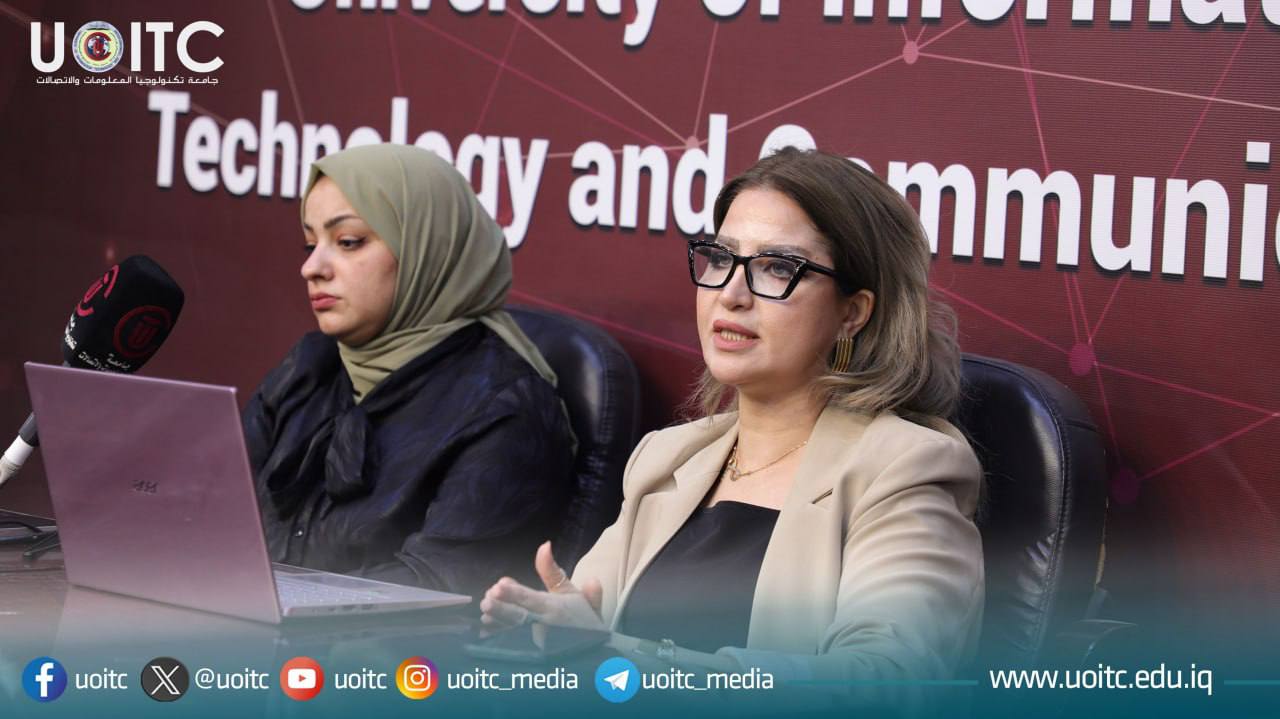
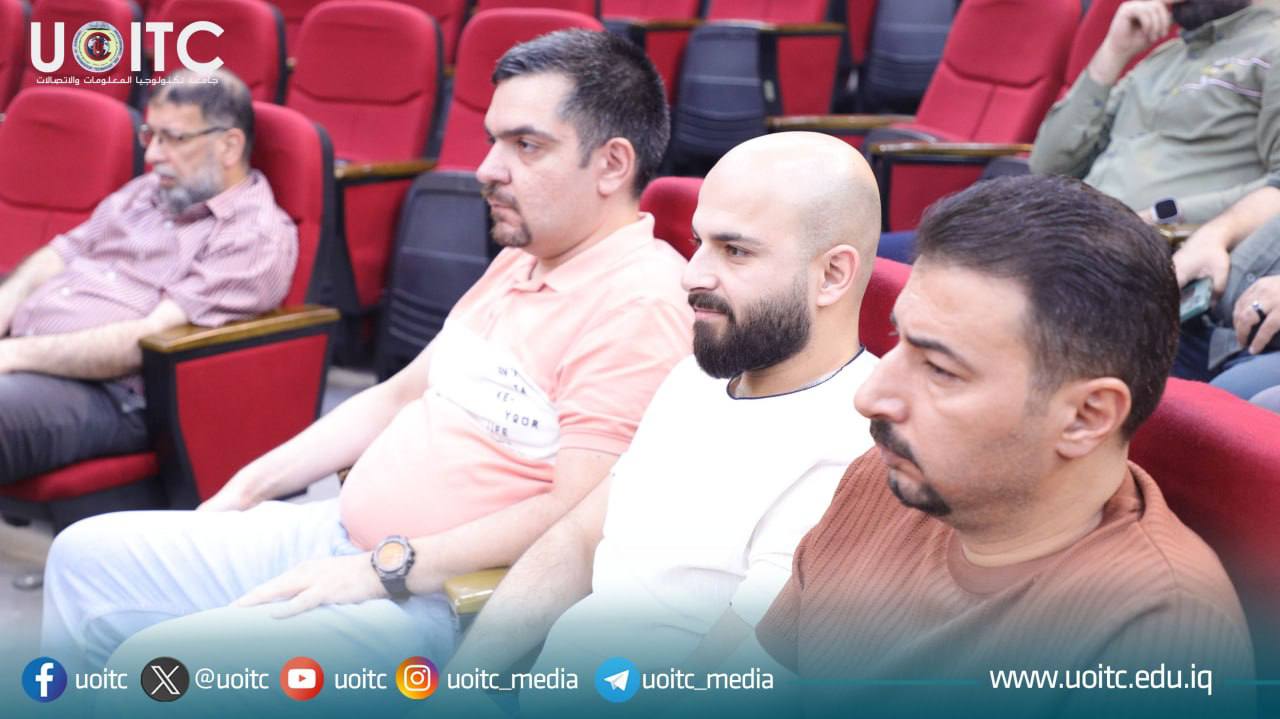
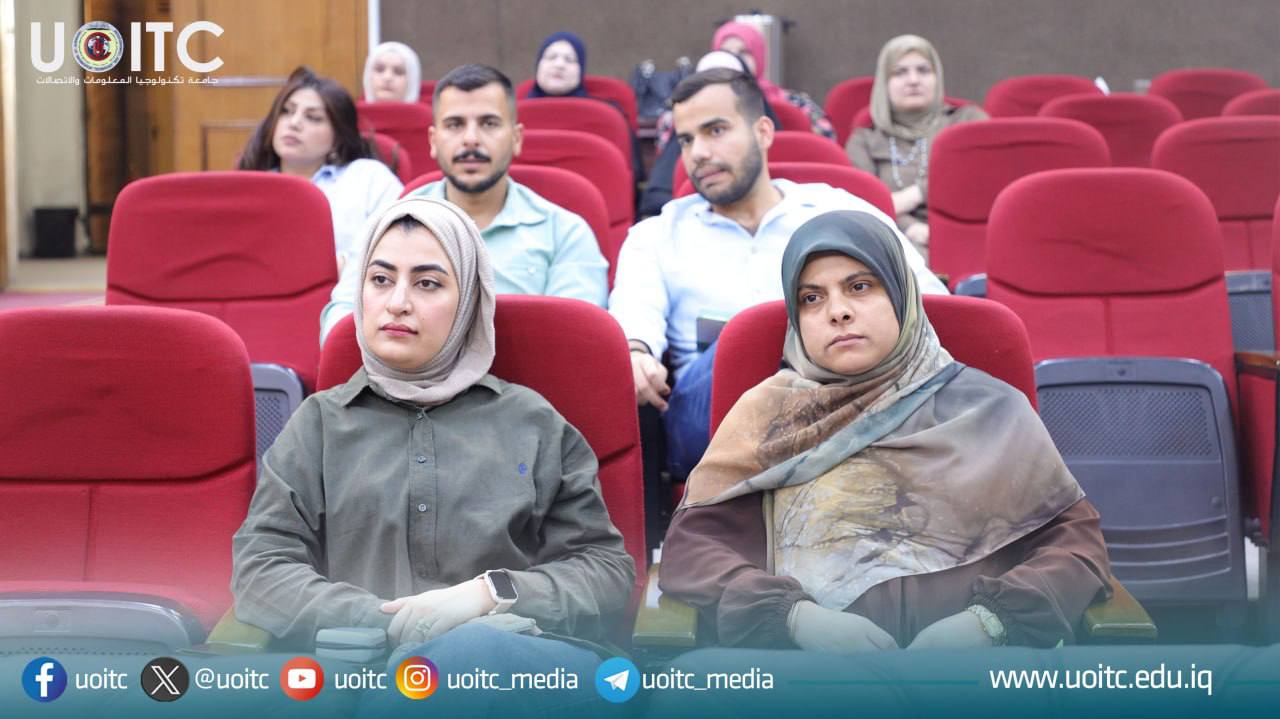
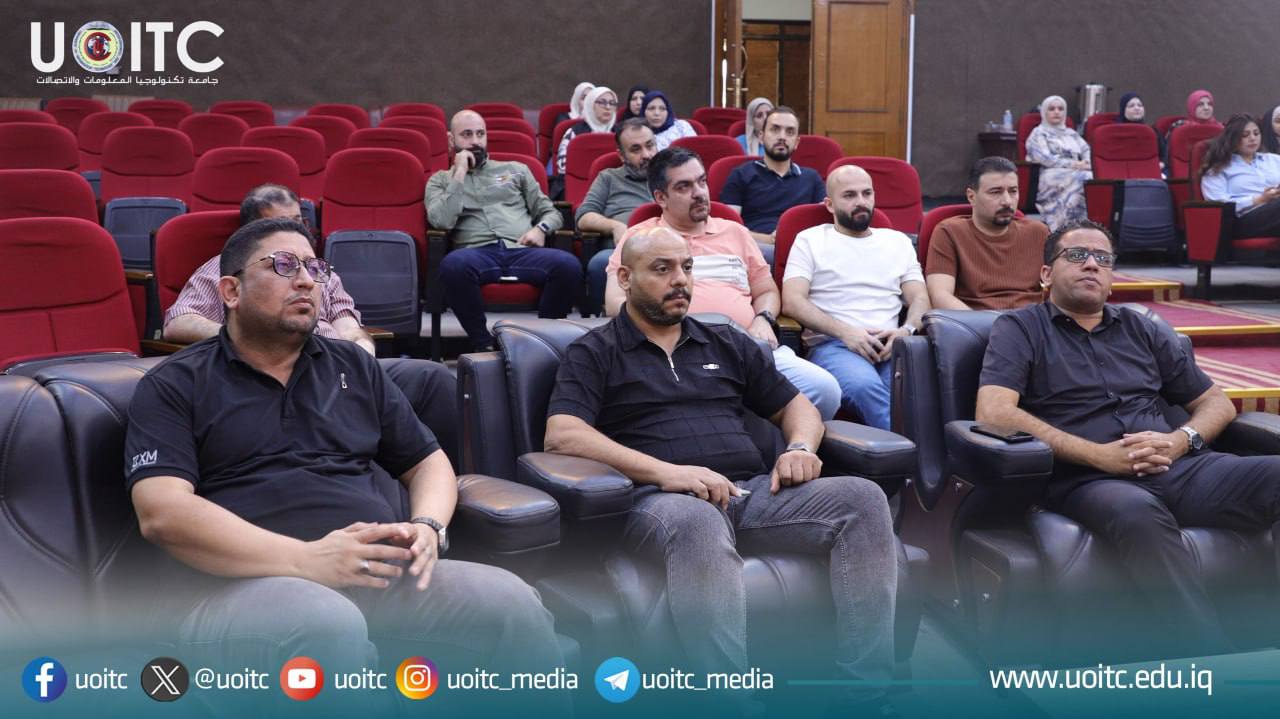
The Department of Scholarships and Cultural Relations, in cooperation with the Center for Continuing Education at the University of Information Technology and Communications (UOITC), organized a scientific seminar entitled “Academic Opportunities for Studying Outside Iraq and Mechanisms to Benefit from Them.” The seminar was attended by a number of faculty members, administrative staff, and students interested in international scholarship and academic development programs.The seminar, presented by the Head of the Department of Scholarships and Cultural Relations, Dr. Dalia Abdul-Hadi, with the participation of Assistant Lecturer Sabreen Abdul-Zahra, reviewed the prominent academic opportunities available for those wishing to pursue postgraduate studies or develop their scientific and research capabilities at international universities and institutions. Furthermore, the session clarified the legal and regulatory frameworks governing application mechanisms to leverage these opportunities in accordance with the regulations and directives approved by the Ministry of Higher Education and Scientific Research.The organization of this seminar stems from the University’s commitment to enhancing academic and administrative awareness regarding the portfolio of missions, fellowships, and study leaves. This portfolio plays a vital role in supporting the academic advancement, developing human competencies, and opening broader horizons for academic cooperation with international universities and institutions.The seminar addressed four primary themes: academic missions along with their approved nomination and funding mechanisms; study fellowships provided by international donor entities and the requirements to benefit from them; study leaves granted to employees wishing to complete their postgraduate studies in accordance with current legislation; and the legal regulations concerning studying during employment at private expense, including recent updates and ministerial directives.The seminar concluded that missions, fellowships, and study leaves represent an institutional investment that contributes to building scientific capacities and transferring modern knowledge and expertise. This, in turn, enhances the University’s status and presence in international academic circles, while supporting the ongoing development and elevation of scientific and research performance.