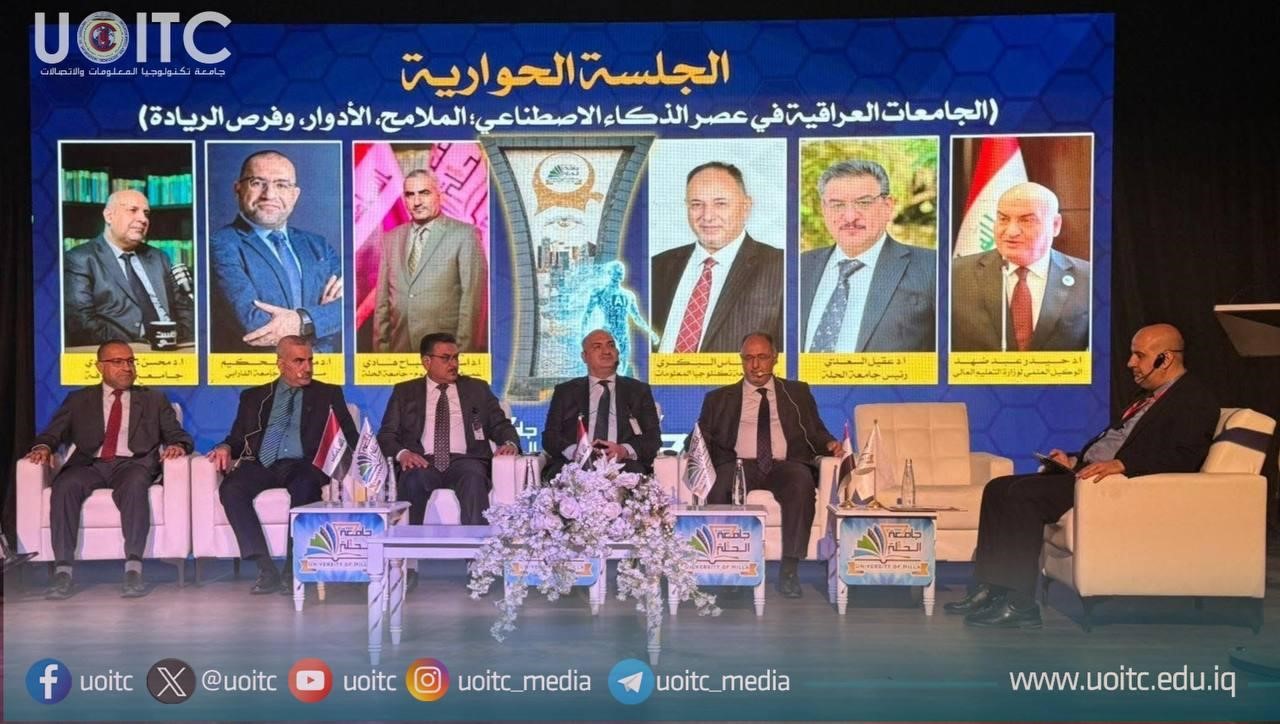
Professor Dr. Abbas Mohsen Al-Bakri, President of the University of Information Technology and Communications (UoITC), took part in a panel discussion held as part of the Al-Hilla University Award for Excellence in Artificial Intelligence and Informatics, title”Iraqi Universities in the Age of Artificial Intelligence: Features, Roles, and Leadership Opportunities,” with the participation of a distinguished group of academic leaders.
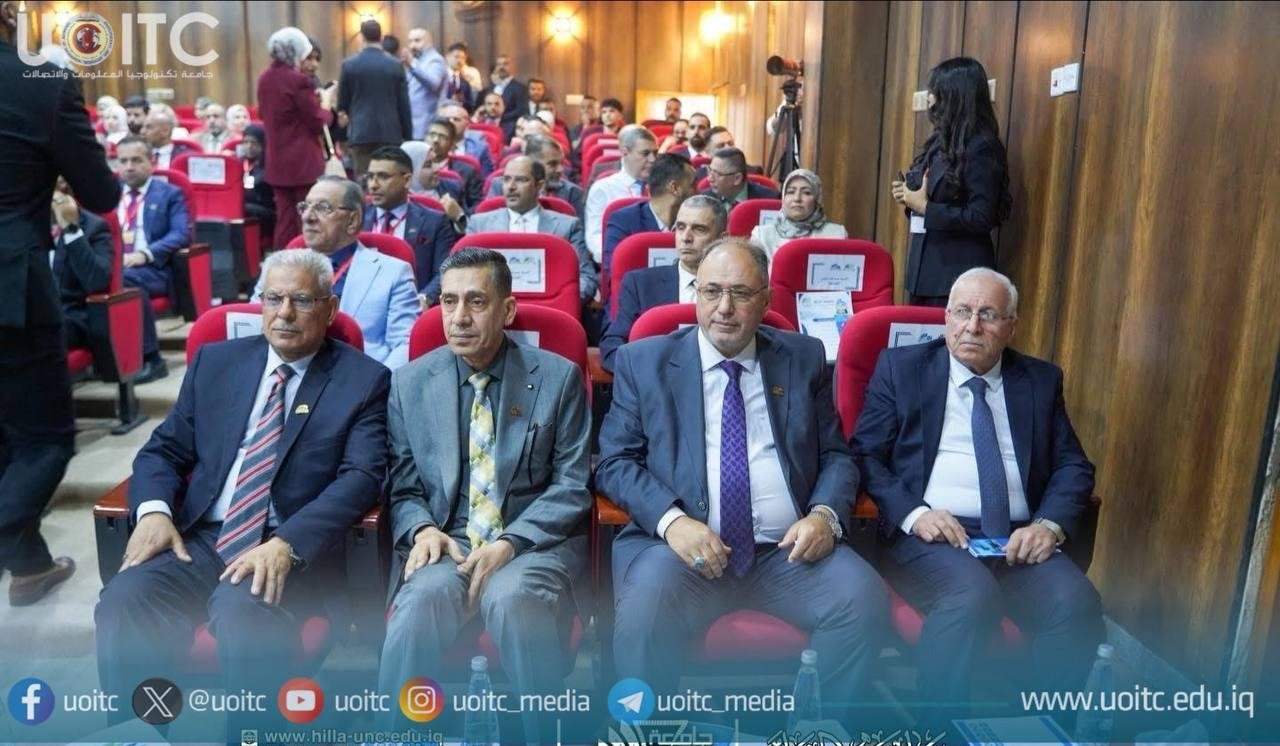
During his intervention, attended by the Deputy Minister of Higher Education for Scientific Affairs, Professor Dr. Haider Abd Dhahd, along with several university presidents, deans, and a select group of academics and researchers, Al-Bakri presented a set of strategic visions reflecting the current state of higher education in Iraq and its future directions.
He emphasized that Iraqi universities are in urgent need of more advanced infrastructure to keep pace with the rapid scientific and technological developments, particularly in the field of artificial intelligence.
Al-Bakri highlighted the importance of gradually transitioning from traditional models to digital universities, and ultimately to smart universities, in alignment with contemporary demands and to enhance the efficiency of both educational and research processes.
He also stressed the importance of not overlooking the role of the private sector, underscoring the need to build genuine and effective partnerships with it, given its vital role in supporting the development of the educational environment and aligning it with labor market needs.
In a related context, Al-Bakri pointed out that the next phase requires a strong focus on implementing the practical recommendations issued by scientific conferences and seminars, transforming them into actionable plans capable of delivering tangible results on the ground.
He further revealed the launching of an Iraqi artificial intelligence model named “Dijla,” which has been developed over the past period but remains limited in scope due to the need for advanced infrastructure to enable its widespread adoption across Iraqi universities.
Additionally, he noted that the university launched, during its Fourth Annual Forum, an initiative to utilize artificial intelligence in supporting the Arabic language. This initiative has received wide engagement, given the relatively weak performance of many global tools in professionally processing Arabic. He indicated that this initiative has the potential to evolve into a national project representing Iraq.
This participation reflects the University of Information Technology and Communications’ commitment to strengthening its active presence in scientific forums and contributing to shaping the future of higher education in Iraq amid rapid digital transformations.