
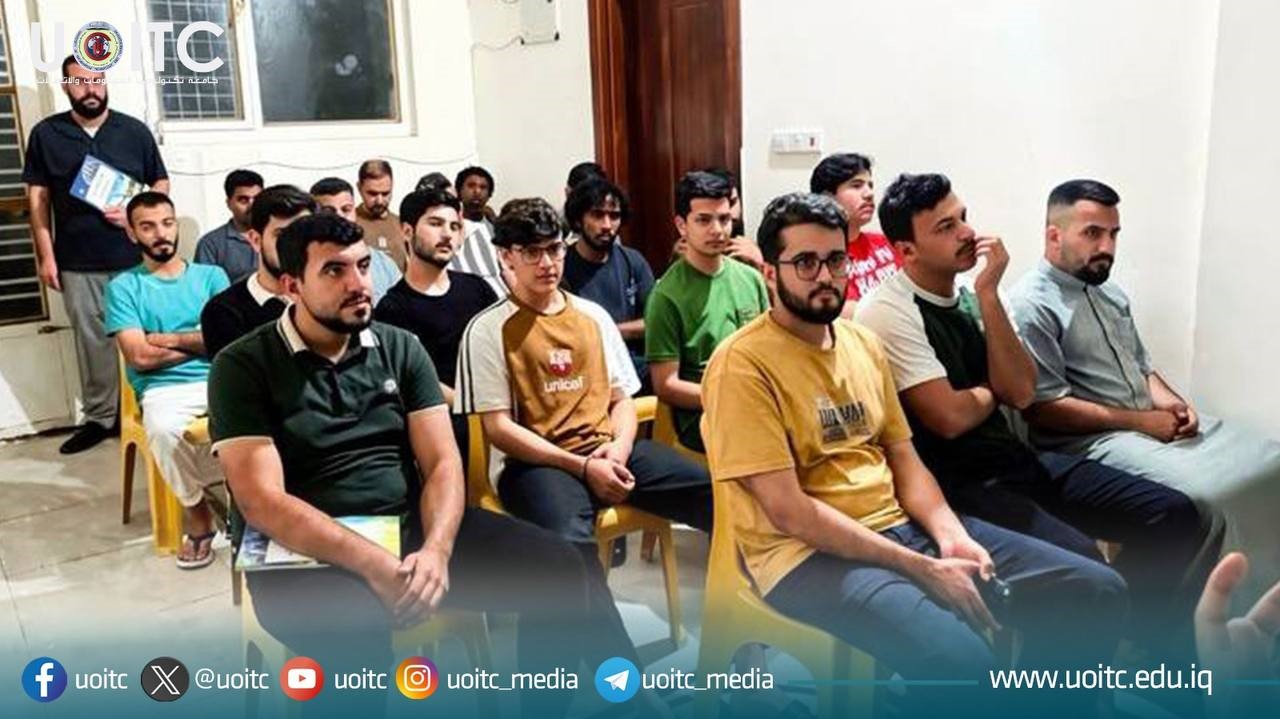

The University Psychological Counseling and Educational Guidance Division, in cooperation with the Department of Internal Affairs, organized an educational seminar for students of the internal departments at the University of Information Technology and Communications entitled: “Drugs and genetic factors: their impact on an individual’s susceptibility to addiction, mental health and the risk of suicidal behavior.”
The seminar, presented by Assist. Lect. Fadhel Shaker Hmoud from the Psychological Counseling and Educational Guidance Division, included an introduction to the pivotal role of genetic factors in determining individuals’ susceptibility to addiction, explaining their effect on brain chemistry, particularly the dopamine system associated with the feeling of reward, and It also reviewed the interaction between genetic and environmental factors, such as psychological stress and childhood traumas, in increasing the likelihood of falling into addiction.
The symposium highlighted the close relationship between addiction and mental health, and the possibility of it developing into severe depression that may lead to dangerous behaviors, including suicidal behavior, as well as the importance of understanding the genetic fingerprint in developing more effective treatment methods, while pointing out the ethical challenges associated with genetic studies in this field.
At the conclusion of the seminar, the importance of scientific awareness and early intervention to reduce the risks of addiction and its negative repercussions on the individual and society was emphasized.