
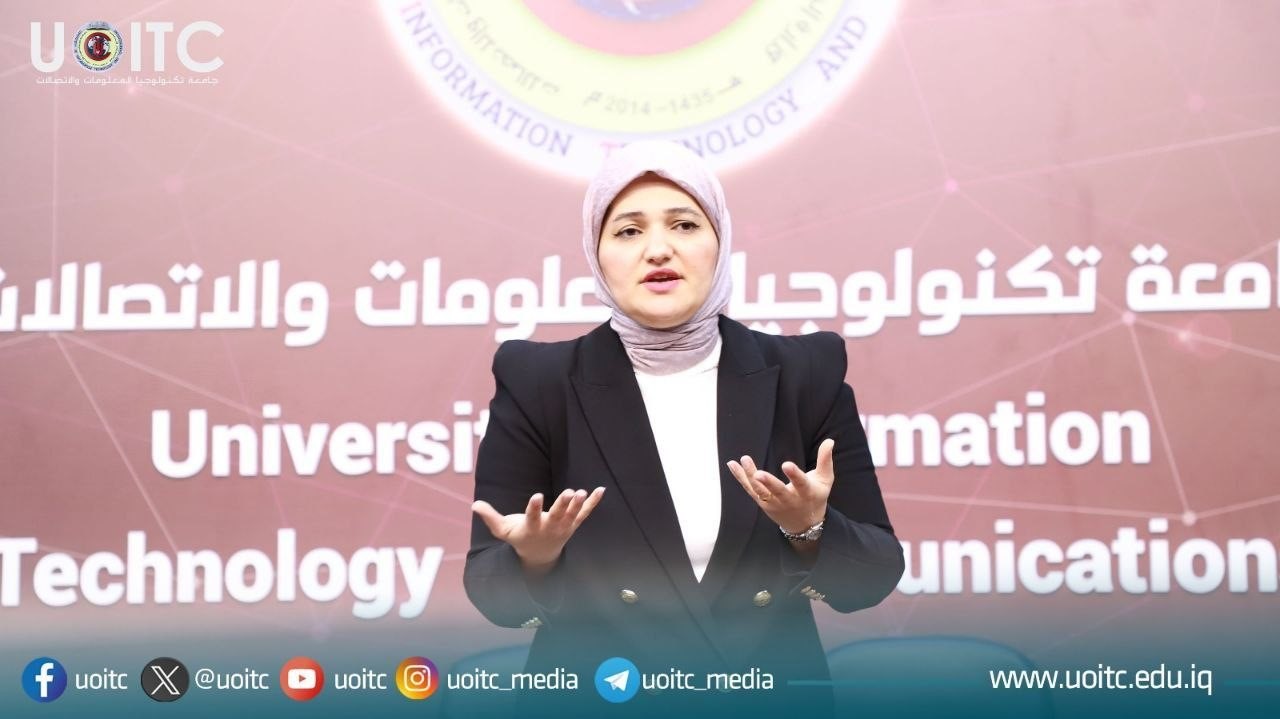
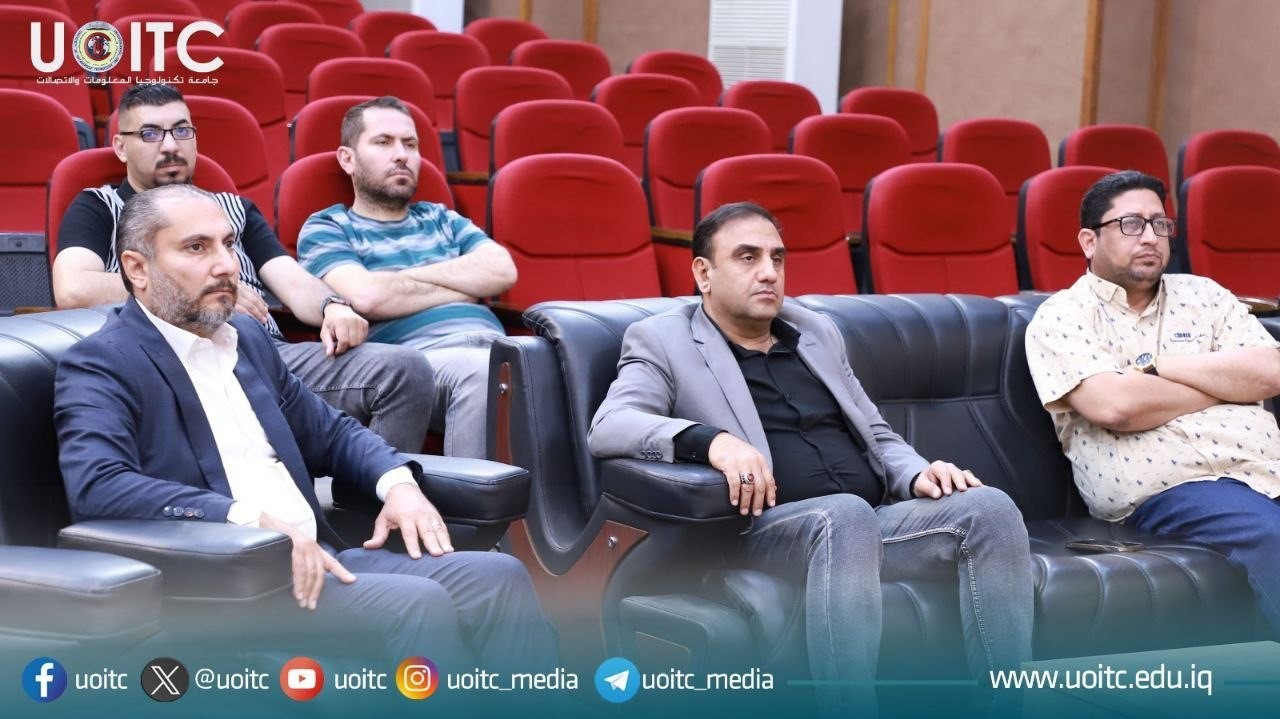
The Continuing Education Center at the University of Information Technology and Communications, in cooperation with the Training, Development, and International Consulting Team at the General Secretariat of the Council of Ministers, organized the second developmental workshop within the sixth phase of the first half of 2026, part of the Capacity Building for Digital Transformation program for employees of state institutions. The workshop, titled “From Network Problems to Smart Decisions,” was presented by Dr. Sara Fawzi Ismail from the College of Business Informatics at the university. It aimed to highlight the role of artificial intelligence (AI) technologies in transforming operational problems within government institutions into smart, data-driven decisions. The workshop covered AI concepts and their key capabilities, including data learning, pattern recognition, prediction, and decision support. It also presented a practical framework for the stages of building smart systems, from problem identification and data collection and processing to model development and appropriate decision-making.
The workshop was part of the sixth phase of the program for building smart systems. The workshop also reviewed the types of data used in artificial intelligence (AI) applications, such as structured, temporal, and real-time data, in addition to images. It highlighted key machine learning and deep learning techniques, and mechanisms for selecting appropriate models based on the nature of the problem and the available data. The workshop also addressed the most important AI applications in government sectors, including education, agriculture, industry, the oil and energy sector, the environment, and health. It explained the role of these technologies in improving performance, reducing malfunctions, predicting risks, and increasing service efficiency. The workshop also discussed the current state of AI in Iraq, noting that it is still in its early stages, despite the existence of national initiatives and strategies, and that implementation levels vary across different sectors.
In conclusion, the workshop emphasized the importance of data quality, the necessity of systems integration, and building human capacity to ensure the success of AI projects. It also reviewed the most prominent challenges.