
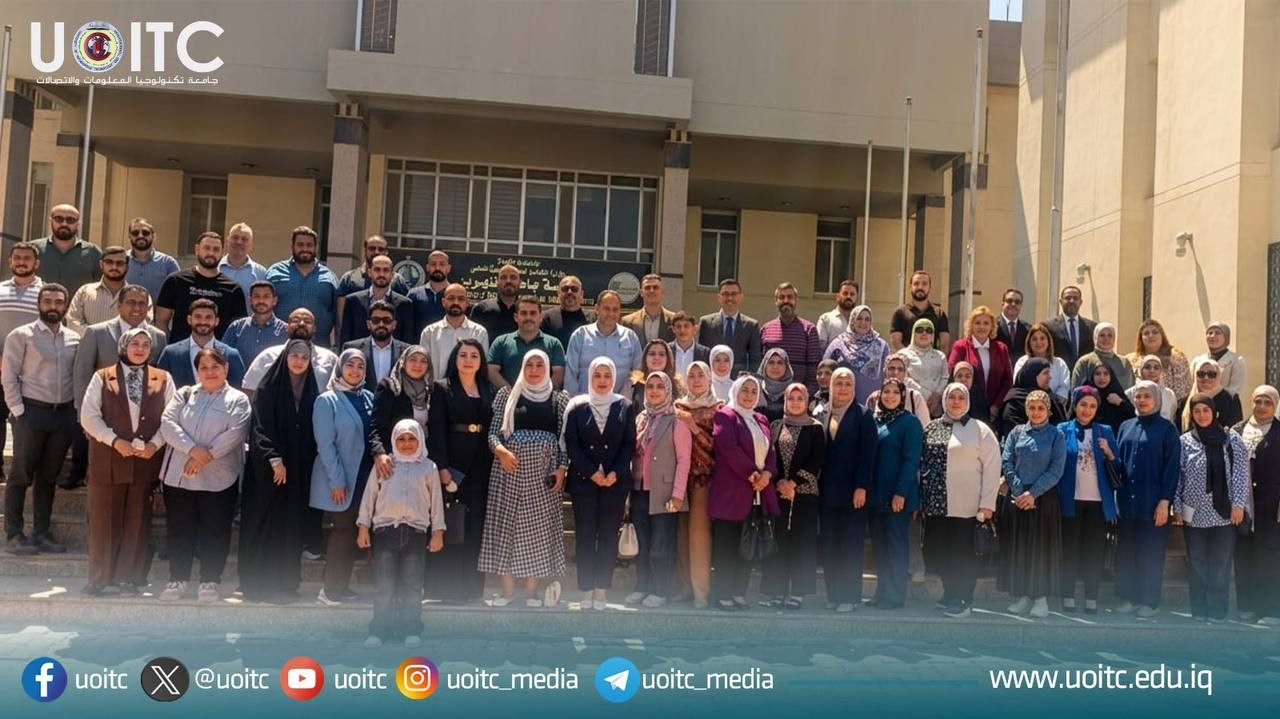
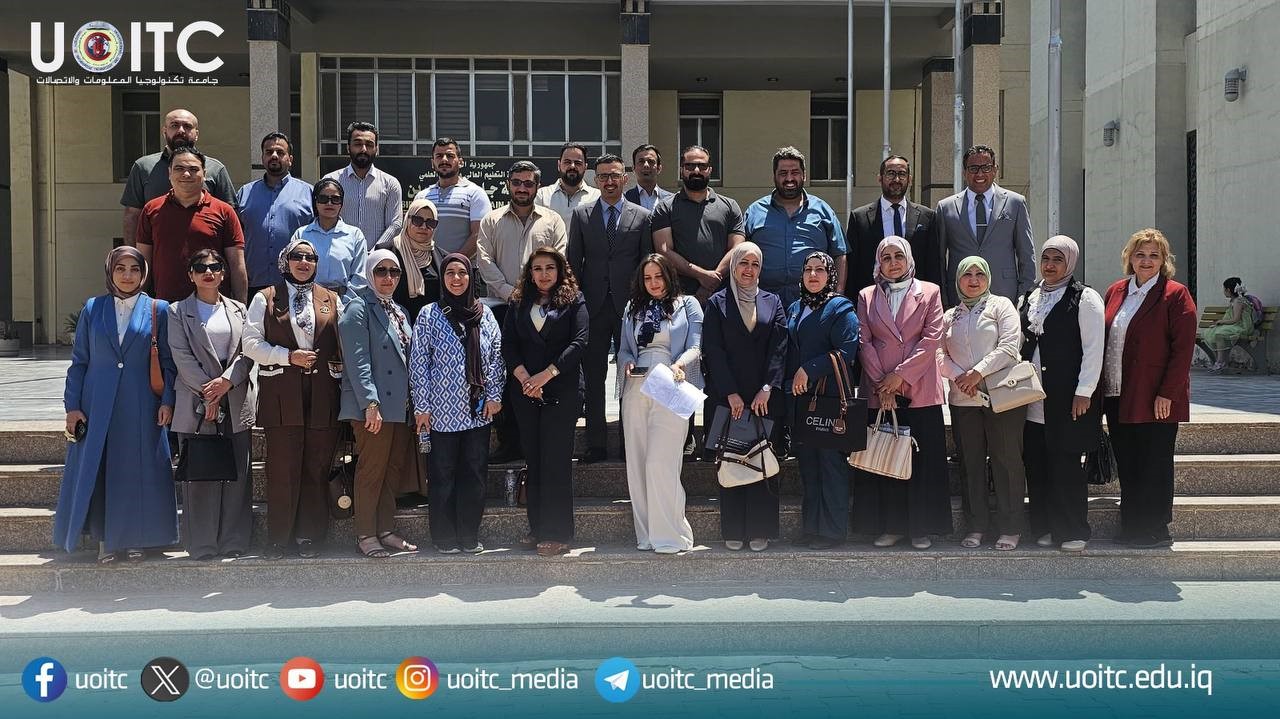
The first group of newly appointed employees at the University of Information Technology and Communications has completed its participation in a training course held at Al-Nahrain University, as part of a preparatory program aimed at developing their skills and enhancing their readiness for work.
The course, titled “Job Behavior and Institutional Loyalty,” was organized in accordance with the directives of the Office of the Prime Minister and the instructions of the Ministry of Higher Education and Scientific Research, which emphasized the importance of enrolling newly appointed staff in training courses conducted at accredited centers, including the Training Center at Al-Nahrain University. This initiative contributes to improving their efficiency and developing their professional capabilities.
The course featured rich discussions addressing key aspects of administrative and professional work. Among the most prominent topics were job loyalty and institutional belonging, highlighting how work can be transformed from a routine duty into a sense of responsibility and genuine partnership in success. Leadership versus management was also discussed by outlining the fundamental differences between a leader who inspires the team and shapes vision, and a manager who focuses on executing processes and maintaining systems.
Professional ethics were explored through an analysis of the sources of professional values, examining whether they are rooted in religious and moral principles, legal frameworks and regulations, or social norms and traditions. The course also reviewed various types of management and categorized employee styles according to their behaviors and productivity, along with effective administrative approaches to deal with them.
The program aimed to empower participants to understand their rights and ethical responsibilities, while equipping leaders with the necessary tools to create a motivating work environment based on mutual respect and institutional loyalty. This, in turn, positively reflects on the quality of outcomes and the sustainability of excellence.