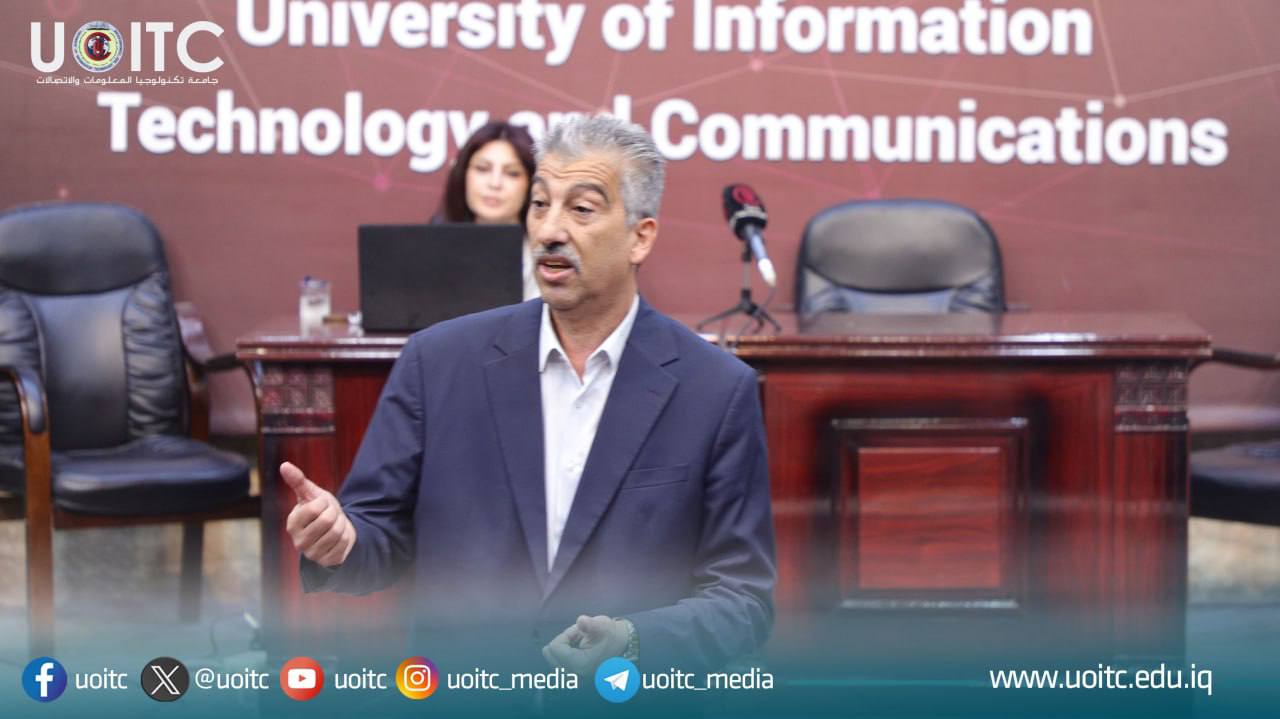
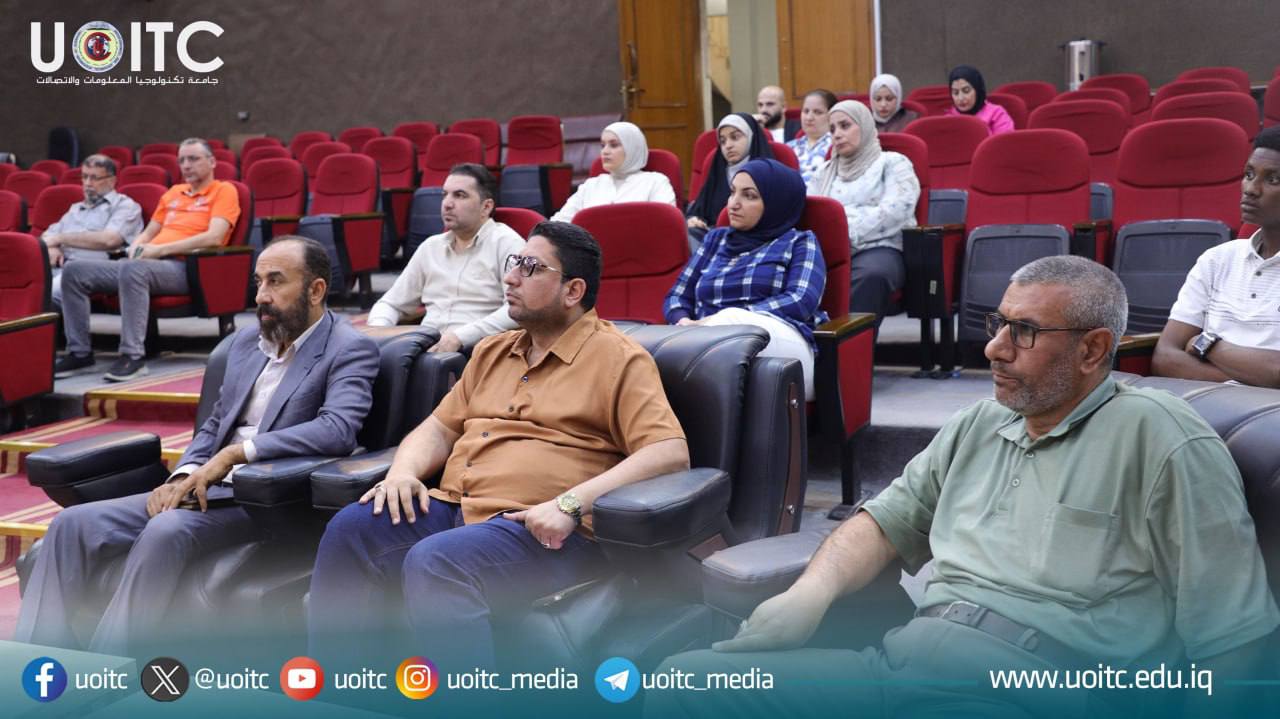
the framework of the 2026 Counter-Intellectual Extremism Strategy, and pursuant to the directives of the Ministry of Higher Education and Scientific Research, the Human Rights Division, in cooperation with the Center for Continuing Education at the University of Information Technology and Communications (UOITC), conducted an awareness seminar entitled “Intellectual Extremism and Its Impact on Society: Causes and Remedies.” The seminar aimed to shed light on the dangers of intellectual extremism and explore mechanisms to mitigate its negative effects on societal security and stability.The seminar, presented by Dr. Iyad Tariq Abdul-Majid from the Department of Scholarships and Cultural Relations, and Asst. Lect. Israa Abdul-Karim Hussein, Head of the Human Rights Division, addressed the concept of intellectual extremism and its various manifestations, particularly intolerant behaviors that threaten social peace and undermine the cohesion of the social fabric.The lecturers reviewed the primary factors and causes leading to intellectual extremism, including “push factors” linked to economic, social, and structural conditions in societies, as well as “pull factors” represented by incentives and personal experiences that contribute to transforming radical ideas into extremist practices and behaviors.Furthermore, the seminar discussed the proposed remedies to confront intellectual extremism, spanning intellectual, religious, legal, digital, social, and economic dimensions, in addition to educational and cultural aspects aimed at fostering a culture of moderation and tolerance. The seminar concluded with several recommendations, most notably: the necessity of building effective institutions dedicated to monitoring the phenomenon of intellectual extremism and tracking its pathways, incorporating topics that promote the values of dialogue and moderation into educational curricula, and expanding the establishment of research centers specialized in extremism studies.