The Citizens’ Affairs Department was established in accordance with the directives of the General Secretariat of the Council of Ministers, which called for the establishment of these departments across all ministries and their affiliated formations to serve the public interest and enhance government performance efficiency. This was officially approved under Ministerial Order No. (12872) issued on October 25, 2004. The department plays a pivotal role in receiving all types of requests from citizens, employees, and students, in addition to receiving their complaints and grievances addressed to the Minister or heads of formations. Furthermore, the department follows up on these requests and complaints and responds to them according to approved official controls and procedures, thereby facilitating procedures, enhancing transparency, and achieving an effective response to individual requirements to ensure the delivery of optimal government services to all targeted groups.

Citizens’ Affairs is considered an administrative division affiliated with the University Presidency in terms of organizational structure. It is concerned with citizens’ affairs related to the university and its various formations, and contributes to developing the level of university performance by addressing raised issues and achieving the optimal response to the needs of students, employees, and members of the academic community.

  1. Citizen Electronic Government Unit: Concerned with activating e-government mechanisms in delivering services and receiving requests and complaints electronically.
  2. Citizens’ Complaints and E-mail Unit: Handles the receipt and processing of complaints received from citizens through various means, including email.
  3. Completed and Uncompleted Citizens’ Requests Follow-up Unit: Specializes in tracking and following up on requests submitted by citizens to ensure their completion within the specified time.
  4. Transparency Program and Public Funds Protection Implementation Follow-up Unit: Aims to promote transparency and integrity practices in administrative work, and contribute to combating financial and administrative corruption.
  5. Martyrs’ Families Affairs Unit: Specializes in caring for the affairs of martyrs’ families and providing them with necessary support and services.
  6. People with Special Needs Unit: Works to meet the needs of individuals with special needs and provide them with necessary services and support to ensure their integration into the university community.
  7. Teaching Staff Affairs Unit: Specializes in following up on requests and inquiries from members of the academic staff, streamlining their administrative procedures, and coordinating between colleges and the university presidency to resolve operational obstacles.
  8. Complaints Box Unit: Oversees paper and direct complaints boxes distributed across university formations, periodically collecting, categorizing, and forwarding opinions and complaints to relevant authorities for resolution.

This division serves as an essential pillar in strengthening the relationship between the university and the community, contributing to improving service                 quality, establishing a culture of accountability and transparency, and efficiently meeting individual needs.

The Citizens’ Affairs Division at the university seeks to achieve a set of objectives that reflect the university’s commitment to delivering high-quality services and enhancing effective communication between citizens and the university administration. Key objectives include:

  1. Establishing an Institutional Culture and Civilized Practices: Reflects an advanced model for managing citizens’ affairs in modern societies and institutional states, relying on principles of transparency, good governance, and positive interaction with individual needs.
  2. Representing the University and its Presidency Officially and Effectively: Serves as the organizational face of the university and represents the University President regarding citizens’ affairs, contributing to enhancing the image of the university as a responsive institution.
  3. Providing Integrated Services and Improving User Experience: Aims to facilitate administrative procedures and provide the best services for completing transactions of citizens, employees, and students through continuous coordination with various university formations (colleges, centers, and administrative departments).
  4. Removing Obstacles and Providing a Convenient Review Environment: Works on overcoming difficulties facing citizens and staff members when visiting the university by developing effective workflow mechanisms and adopting organizational and technical solutions that accelerate transaction processing.
  5. Enhancing Communication and Interaction Between the University and Community: Contributes to strengthening relationships between the university and society through rapid, effective responses to citizen requests and creating direct communication channels that ensure fair solutions.

Conclusion: By achieving these goals, the Citizens’ Affairs Division contributes to improving the university work environment, boosting beneficiary satisfaction, and establishing principles of transparency and efficiency in service delivery.

Affairs Division at the University

The Citizens’ Affairs Division plays a central role in facilitating communication between citizens and university management through the execution of key tasks aimed at achieving effective responses to user requirements:

  1. Receiving Visitors and Processing Requests: Receives citizens across various categories (faculty, staff, students, and external visitors), listens to complaints and suggestions, and forwards them to relevant authorities after presenting them to officials.
  2. Organizing Official Interviews with University Officials: Oversees the scheduling of official meetings and interviews with the University President, Vice Presidents for Administrative and Scientific Affairs, and Deans of Colleges.
  3. Providing Legal and Administrative Guidance to Visitors: Guides citizens toward appropriate legal frameworks for resolving their issues and clarifies administrative procedures and applicable regulations.
  4. Communicating with Relevant Authorities to Follow Up and Execute Requests: Communicates with internal departments to ensure request execution according to approved administrative procedures.
  5. Following Up on Requests and Complaints: Tracks requests and complaints sent to university formations to ensure resolution within specified timelines, providing periodic reports on completion levels and obstacles.
  6. Entering Citizen Requests into the Citizen Electronic Government Program: Enters request data into the General Secretariat of the Council of Ministers’ e-government system to allow electronic tracking and rapid response.
  7. Conducting Field Visits to Monitor Administrative Performance: Executes periodic field visits across all university formations to inspect workflow, evaluate service delivery, and ensure responsiveness to citizen requests.
  8. Communicating with Citizens Regarding Request Status: Notifies citizens of actions taken regarding their requests or complaints via phone call, email, or in-person visits to ensure transparency.
  9. Surveying Citizen Opinions and Receiving Suggestions: Measures citizen and visitor satisfaction regarding service quality through opinion surveys and feedback to improve institutional performance.

Conclusion: The Citizens’ Affairs Division plays a vital role in achieving effective communication between citizens and university management, promoting transparency, accountability, and continuous organizational improvement based on beneficiary feedback.

Request Submission Mechanism (Interview)

  • Write the request clearly and specifically, ensuring the subject and title of the request are clearly stated.
  • Provide the full triple name, address of the applicant, phone number, email address, workplace/department, and affiliated scientific department to enable official response and communication with the relevant authority.

To access the online interview application form… [Click Here]

For further inquiries and submitting complaints, please contact

  • E-mail: cau.uoitc@uoitc.edu.iq
  • Mobile: 07906585060

تأسَّس قسم شؤون المواطنين استنادًا إلى توجيهات الأمانة العامة لمجلس الوزراء، التي دعت إلى إنشاء هذه الأقسام في جميع الوزارات والتشكيلات التابعة لها، وذلك تحقيقًا لمقتضيات المصلحة العامة وتحسين كفاءة الأداء الحكومي. وقد تم إقرار ذلك بموجب الأمر الوزاري رقم ( 12872) الصادر بتاريخ 25/10/2004، حيث يضطلع القسم بدور محوري في استقبال طلبات المواطنين والموظفين والطلبة بمختلف أنواعها، إضافةً إلى تلقي شكاواهم وتظلماتهم المقدَّمة إلى السيد الوزير أو رؤساء التشكيلات. كما يتولى القسم متابعة هذه الطلبات والشكاوى والإجابة عليها وفق الضوابط والإجراءات الرسمية المعتمدة، مما يسهم في تسهيل الإجراءات، وتعزيز الشفافية، وتحقيق الاستجابة الفعالة لمتطلبات الأفراد، بما يضمن تقديم أفضل الخدمات الحكومية لكافة الفئات المستهدفة
تعد شؤون المواطنين شعبة إدارية تتبع رئاسة الجامعة من حيث الهيكل التنظيمي، ويُعنى بشؤون المواطنين المتعلقة بالجامعة وتشكيلاتها المختلفة، كما يسهم في تطوير مستوى الأداء الجامعي من خلال معالجة المشكلات المطروحة وتحقيق الاستجابة المثلى لاحتياجات الطلبة والموظفين وأعضاء المجتمع الأكاديمي

 وحدة حكومة المواطن الإلكترونية: تعنى بتفعيل آليات الحكومة الإلكترونية في تقديم الخدمات وتلقي الطلبات والشكاوى إلكترونيًا
وحدة شكاوى المواطنين والبريد الإلكتروني: تتولى استقبال ومعالجة الشكاوى الواردة من المواطنين عبر الوسائل المختلفة، بما في ذلك البريد الإلكتروني
وحدة متابعة طلبات المواطنين المنجزة وغير المنجزة: تختص برصد ومتابعة الطلبات المقدمة من المواطنين لضمان إنجازها في الوقت المحدد
وحدة متابعة تنفيذ برنامج الشفافية وحماية المال العام: تهدف إلى تعزيز ممارسات الشفافية والنزاهة في العمل الإداري، والمساهمة في مكافحة الفساد المالي والإداري
وحدة شؤون ذوي الشهداء: تختص برعاية شؤون ذوي الشهداء وتقديم الدعم والخدمات اللازمة لهم
وحدة ذوي الاحتياجات الخاصة: تعمل على تلبية احتياجات ذوي الاحتياجات الخاصة وتقديم الخدمات والمساندة اللازمة لهم لضمان اندماجهم في المجتمع الجامعي
وحدة شؤون التدريسيين: تختص بمتابعة طلبت واستفسارات أعضاء الهيئة التدريسية، وتسهيل الإجراءات الإدارية الخاصة بهم والتنسيق بين الكليات ورئاسة الجامعة لمعالجة عقباتهم العملياتية
وحدة صندوق الشكاوى: تتولى الإشراف على صناديق الشكاوى الورقية والمباشرة الموزعة في تشكيلات الجامعة، وجمع الآراء والشكاوى الدورية وتصنيفها وإحالتها للجهات المختصة لمعالجتها

تعد هذه الشعبة ركيزة أساسية في تعزيز العلاقة بين الجامعة والمجتمع، حيث يسهم في تحسين جودة الخدمات المقدمة، وترسيخ ثقافة المساءلة والشفافية، وتلبية احتياجات الأفراد بكفاءة وفعالية.

تسعى شعبة شؤون المواطنين في الجامعة إلى تحقيق مجموعة من الأهداف التي تعكس التزام الجامعة بتقديم خدمات ذات جودة عالية، وتعزيز التواصل الفعّال بين المواطنين والإدارة الجامعية. وتتمثل أبرز هذه الأهداف فيما يلي

 ترسيخ ثقافة المؤسساتية والممارسات الحضارية: تعكس الشعبة نموذجًا متقدمًا لإدارة شؤون المواطنين في المجتمعات الحديثة ودولة المؤسسات، حيث تعتمد على مبادئ الشفافية، والحوكمة الرشيدة، والتفاعل الإيجابي مع احتياجات الأفراد

تمثيل الجامعة ورئاستها بشكل رسمي وفعال: تعد الشعبة الواجهة التنظيمية للجامعة وتمثل السيد رئيس الجامعة في ما يتعلق بشؤون المواطنين، مما يسهم في تعزيز صورة المؤسسة الجامعية كبيئة متجاوبة مع احتياجات المجتمع الأكاديمي والإداري

تقديم خدمات متكاملة وتحسين تجربة المستفيدين: تهدف الشعبة إلى تسهيل الإجراءات الإدارية وتقديم أفضل الخدمات لإنجاز معاملات المواطنين، الموظفين، والطلبة، من خلال التنسيق والتعاون المستمر مع مختلف تشكيلات الجامعة، بما في ذلك الكليات، المراكز، والأقسام الإدارية

إزالة العقبات وتوفير بيئة مراجعة ميسرة: تعمل الشعبة على تذليل الصعوبات التي قد تواجه المواطنين والمنتسبين عند مراجعة الجامعة، من خلال تطوير آليات عمل فعالة، واعتماد حلول تنظيمية وتقنية تساهم في تسريع إنجاز المعاملات وتحسين تجربة المراجعين

تعزيز التواصل والتفاعل بين الجامعة والمجتمع: تسهم الشعبة في تعزيز العلاقة بين الجامعة والمجتمع من خلال الاستجابة السريعة والفعالة لطلبات المواطنين، وإيجاد قنوات تواصل مباشرة تضمن تقديم حلول عادلة ومنصفة لمختلف القضايا المطروحة

الخاتمة: من خلال تحقيق هذه الأهداف، تسهم شعبة شؤون المواطنين في تحسين بيئة العمل الجامعي، وتعزيز مستوى رضا المستفيدين، وترسيخ مبادئ الشفافية والكفاءة في تقديم الخدمات، مما يعكس الدور الريادي للجامعة في خدمة المجتمع وتطوير الأداء الإداري.

تؤدي شعبة شؤون المواطنين في الجامعة دورًا محوريًا في تعزيز التواصل بين المواطنين وإدارة الجامعة، من خلال تنفيذ مجموعة من المهام التي تهدف إلى تحقيق الاستجابة الفعالة لمتطلبات المستفيدين، وتحسين جودة الخدمات المقدمة. وفيما يلي أبرز الأعمال التي تقوم بها الشعبة

استقبال المراجعين ومعالجة طلباتهم: تتولى الشعبة استقبال المواطنين من مختلف الفئات، بما في ذلك التدريسيين، الموظفين، الطلبة، والمراجعين الخارجيين، والاستماع إلى شكاواهم ومقترحاتهم، ومن ثم إحالتها إلى الجهة المعنية بعد عرضها على السادة المسؤولين لضمان معالجتها وفق الإجراءات المتبعة

تنظيم المقابلات الرسمية مع المسؤولين في الجامعة: تشرف الشعبة على تنظيم اللقاءات والاجتماعات الرسمية مع رئيس الجامعة، مساعدي الرئيس للشؤون الإدارية والعلمية، وعمداء الكليات، بهدف تسهيل تواصل المواطنين مع القيادات الجامعية لمناقشة القضايا ذات الصلة

تقديم التوجيه القانوني والإداري للمراجعين: تقوم الشعبة بتوجيه المواطنين وإرشادهم إلى الصيغ القانونية المناسبة لحل مشكلاتهم، إضافةً إلى توضيح السياقات الإدارية المتبعة، والقرارات والقوانين النافذة ذات العلاقة بطلباتهم، مما يسهم في تسهيل الإجراءات وتوفير الحلول الفعالة

مخاطبة الجهات المختصة بمتابعة وتنفيذ الطلبات: تتولى الشعبة مهمة التواصل مع الجهات المسؤولة داخل الجامعة لضمان تنفيذ الطلبات وفقًا للإجراءات الإدارية المعتمدة، مما يسهم في تعزيز مستوى الاستجابة وسرعة الإنجاز

متابعة الطلبات والشكاوى: تقوم الشعبة بمتابعة جميع الطلبات والشكاوى التي يتم إرسالها إلى تشكيلات الجامعة المختلفة، لضمان تنفيذها ومعالجتها ضمن الإطار الزمني المحدد، مع تقديم تقارير دورية حول مستوى الإنجاز والمعوقات التي قد تواجه التنفيذ

إدخال طلبات المواطنين في برنامج حكومة المواطن الإلكترونية: تسهم الشعبة في إدخال بيانات طلبات المواطنين ضمن برنامج حكومة المواطن الإلكترونية التابع للأمانة العامة لمجلس الوزراء، مما يتيح إمكانية متابعة الطلبات إلكترونيًا وتحقيق الاستجابة السريعة من الجهات المختصة

الزيارات الميدانية لمتابعة الأداء الإداري: تقوم الشعبة بتنفيذ زيارات ميدانية دورية إلى جميع تشكيلات الجامعة، بهدف الاطلاع على سير العمل، وتقييم مستوى تقديم الخدمات، والتأكد من استجابة الجهات المختلفة لطلبات المواطنين والشكاوى المقدمة

التواصل مع المواطنين بشأن إجراءات طلباتهم: تعمل الشعبة على إبلاغ المواطنين بالإجراءات المتخذة بشأن طلباتهم أو شكاواهم من خلال الاتصال الهاتفي، البريد الإلكتروني (E-mail)، أو عبر المراجعة المباشرة، لضمان توفير المعلومات الدقيقة حول حالة الطلبات، وتعزيز الشفافية في التعامل مع المراجعين

استطلاع آراء المواطنين وتلقي مقترحاتهم: تسعى الشعبة إلى (قياس رضا المواطنين والمراجعين) حول جودة الخدمات المقدمة من قبل الجامعة، من خلال استطلاع آرائهم واستقبال مقترحاتهم، مما يسهم في تحسين الأداء المؤسسي، وتطوير آليات العمل بناءً على التغذية الراجعة الواردة من المستفيدين

الخاتمة: تؤدي شعبة شؤون المواطنين في الجامعة دورًا حيويًا في تحقيق التواصل الفعّال بين المواطنين والإدارة الجامعية، من خلال استقبال الطلبات، وتنظيم اللقاءات، وتوجيه المراجعين، ومتابعة تنفيذ القرارات، إضافةً إلى إدخال البيانات في الأنظمة الإلكترونية وإجراء زيارات ميدانية لضمان كفاءة الأداء. كما تسهم في تعزيز الشفافية والمساءلة، من خلال استطلاع آراء المواطنين حول الخدمات المقدمة، والعمل على تطوير السياسات والإجراءات بناءً على ملاحظاتهم ومقترحاتهم.

آلية تقديم الطلب ( المقابلة )

• كتابة الطلب بصورة واضحة ومحددة مع مراعاة تحديد موضوع الطلب وعنوانه.

• كتابة الاسم الثلاثي وعنوان مقدم الطلب ورقم هاتفه والبريد الالكتروني والدائرة او مقر العمل والقسم العلمي المنتسب اليه حتى يتسنى الاجابة ومخاطبة الجهة المعنية.

للدخول الى استمارة المقابلات الالكترونية…  اضغط هنا

للاستفسار اكثر وتقديم الشكاوى يرجى الاتصال
E-mail: cau.uoitc@uoitc.edu.iq
Mobile: 07906585060

Training Courses

An explanatory chart showing the number of participants for each training session

AFFILIATES

An illustration showing the participating entities for each training course

EVENT PARTICIPANTS

An explanatory chart showing the number of participants for each educational workshop

EVENT AFFILIATES

An illustration showing the participating parties for each educational workshop

اعلان

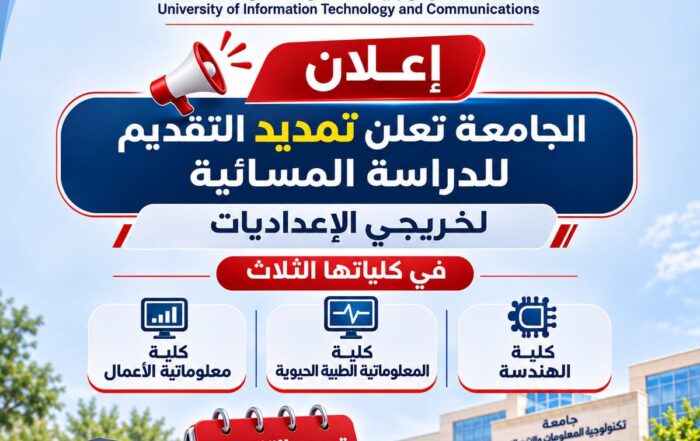
تعلن جامعة تكنولوجيا المعلومات والاتصالات عن أن التقديم للمنصة الدراسية ضمن برنامج (ادرس في العراق) للعام الدراسي 2024-2025 سيكون متاحاً اعتباراً من 1 / 4 / 2024 ولغاية 15 / 8 / 2024 للطلبة العرب والأجانب عن طريق الرابط ادناه
https://studyiniraq.scrd-gate.gov.iq/home

لتحميل خطة جامعة تكنولوجيا المعلومات والاتصالات للعام 2024- 2025… اضغط هنا لتحميل دليل برنامج دراسة العراق… اضغط هنا.

test

Services

E-Gate

E-Gate

E-Gate System:- It represents a window for submitting high school students and institutes on the central admission channel in universities and technical institutes.

Open Data System

Open Data System

Open Data System:- This System includes all data about our university that can be public for others.

Digital Content System

Digital Content System

Digital Content System:- The system is designed to include all digital information about our university.

Virtual Library

Virtual Library

Virtual Library: – It includes a huge of books as library that represent a key for all students.

Alumni System

Alumni System

Alumni System:- The system designed for alumni students from our university.

Work-Flow System

Work-Flow System

Work-Flow System.

Technology incubator

Technology incubator

Technology incubator.

SIS (Students Information System)

SIS (Students Information System)

SIS (Students Information System)

Payment Assistant Service

Payment Assistant Service

Payment Assistant Service

Citizens Affairs Form

Citizens Affairs Form

Citizens Affairs Form

Special grade interviews

Special grade interviews

Special grade interviews

Unified Medical Clinics

Unified Medical Clinics

Unified Medical Clinics

Announcement

The University of Information Technology and Communications announces that applications for the study platform within the (Study in Iraq) program for the academic year 2024-2025 will be available from 4/1/2024 until 8/15/2024 for Arab and foreign students via the link below..
https://studyiniraq.scrd-gate.gov.iq/home

To download the University of Information Technology and Communications plan for the year 2024-2025… Click Here

To download the Iraq Study Program Guide… Click Here.

Latest News
 MCCE

Courses

Program Specification  MCCE Department

Discover the future of TV with OLED technology

The description of this academic program provides a brief summary of the main characteristics of the program and of the expected learning outcomes of the student to demonstrate whether he has made the best use of the opportunities available. It is accompanied by a description of each course within the program

Program Curriculum

Mobile Communications and Computing Engineering Department

Program Catalogue for  MCCE

For more information  download the program specification from here

Modules Catalogue for MCCE

For more information  download the program specification from here

Self-Study Report

International Open Courses

Participating with the IREX Team International Foundation for E-Learning, a professional training program in the field of e-learning, and the result of the professional training program for e-learning was to support Iraqi faculty members in integrating effective e-learning on a large scale via the Internet. The program was supported by the American Agency in Baghdad within the framework of the American Higher Education Partnerships Program in Iraq and in partnership with the Ministry of Higher Education and Scientific Inclusion in Baghdad and the Ministry of Higher Education and Scientific Inclusion in More Kurdistan.

Loading...

International Open Courses

Participating with the IREX Team International Foundation for E-Learning, a professional training program in the field of e-learning, and the result of the professional training program for e-learning was to support Iraqi faculty members in integrating effective e-learning on a large scale via the Internet. The program was supported by the American Agency in Baghdad within the framework of the American Higher Education Partnerships Program in Iraq and in partnership with the Ministry of Higher Education and Scientific Inclusion in Baghdad and the Ministry of Higher Education and Scientific Inclusion in More Kurdistan.

DESIGN EVERYTHING LEADS TO TOP

We Create the perfect Studying experience

Classrooms and Labs with the best study types of equipment.

Loading...

Scientific Research Affairs for our University

Scientific Affairs, with its various types of knowledge, research and scientific development, represents a forum for the production of university researchers from various scientific productions, patents, and a continuous scientific publishing movement…