
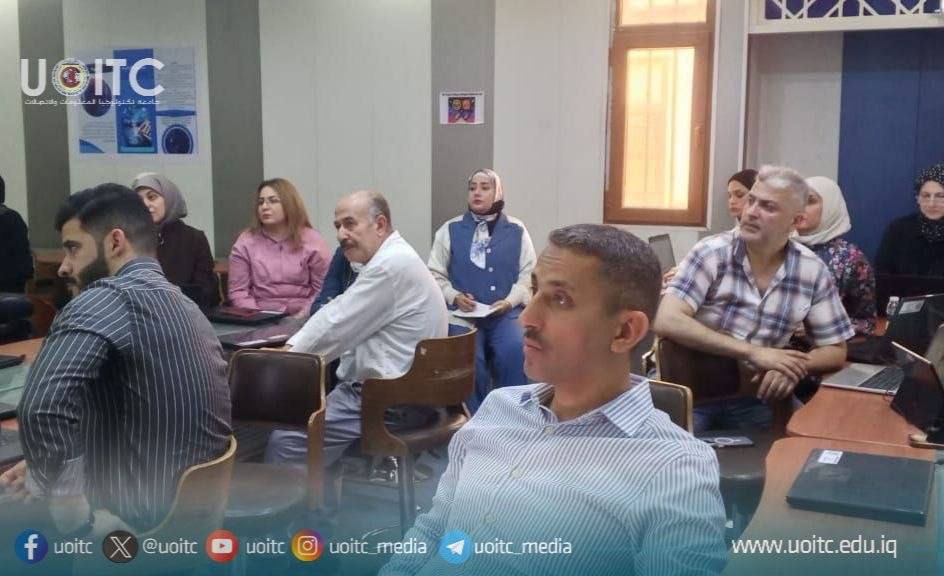
The Biomedical Informatics College concluded a specialized training course on the use of the “IQ-Learn” system
The Biomedical Informatics College at the University of Information Technology and Communications, in collaboration with the Continuous Education Unit, concluded a specialized five-day training course titled “How to Use the IQ-Learn System,” with the participation of a number of the college’s staff members.
The course aimed to develop participants’ skills in using the IQ-Learn system and to introduce mechanisms for managing e-learning content, thereby contributing to enhancing the efficiency of the educational process and leveraging modern digital technologies within the university learning environment.
The course included practical sessions delivered by Assist. Lect. Zaid Ali Sa’eed and Assist. Lect. May Tareq Abdulhadi, who outlined the system’s key features and demonstrated how to utilize its tools for managing courses and communicating with students.
This course is part of the Biomedical Informatics College efforts to enhance the digital capabilities of teaching staff and keep pace with technological advancements in e-learning, thereby improving academic performance and supporting the university’s digital transformation.
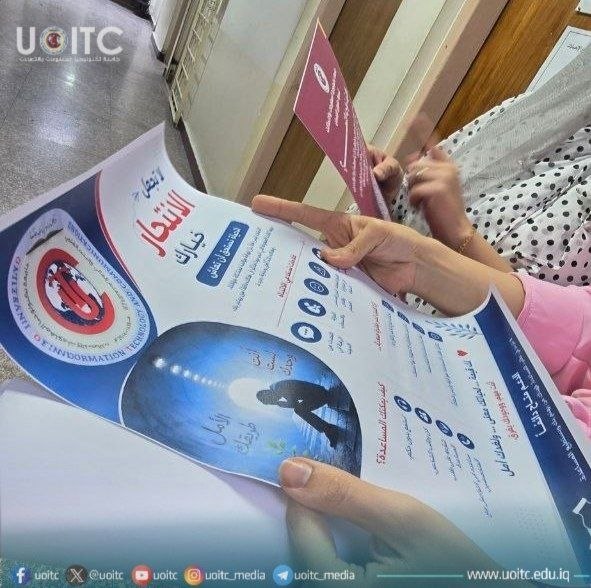
UoITC Organizes Awareness Campaign on Reducing Suicide Risks and Raise Community Awareness
The Department of Media and Government Communications at the University of Information Technology and Communications (UoITC) organized an awareness campaign to reduce the risks of suicide.
This initiative is part of the university’s ongoing efforts to enhance community awareness and foster a culture of mental health support among members of the university community.
The campaign involved displaying awareness posters throughout the university’s corridors and facilities.
These posters featured guidance and educational messages aimed at identifying the risks, causes, and negative impacts of suicide, while also emphasizing the vital importance of seeking psychological and social assistance when facing pressures and crises.
The Department of Media and Government Communications emphasized that this campaign stems from the university’s responsibility to spread awareness, promote mental health, and contribute to building a supportive and safe academic environment. Ultimately, this serves to protect students and staff while reinforcing values of hope and community solidarity.
This campaign is part of a series of educational activities and programs conducted by the university to raise awareness about various societal issues and foster positive behaviors among its students and staff.
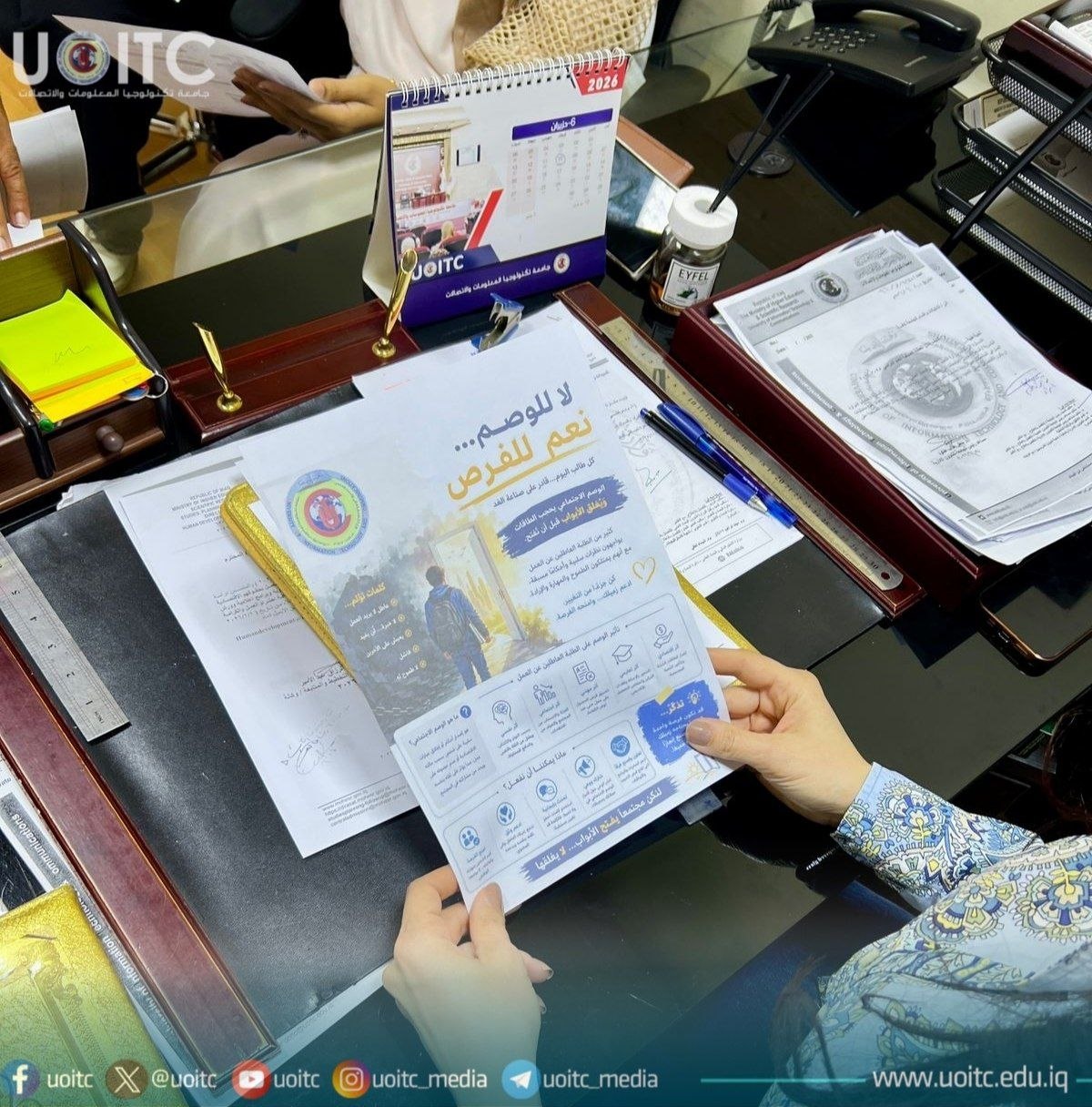
The University Organizes an Awareness Campaign on “Social Stigma” and the Rights of Unemployed Graduates
The University Psychological Counseling Division, in cooperation with the Human Rights Division at the University of Information Technology and Communications (UOITC), organized an extensive awareness campaign targeting university students and staff to highlight the phenomenon of “social stigma” and its negative impacts on unemployed graduates.The campaign featured field tours across the university’s campuses, during which awareness and educational brochures were distributed. These materials reviewed the concept of social stigma, its underlying causes, and its direct repercussions on individuals, particularly graduates seeking employment. The brochures also discussed the psychological, social, and economic consequences of unemployment, which hinder the integration of youth into society and deprive them of enjoying their basic rights.The distributed educational guides focused on the importance of rejecting stereotypes and preconceptions associated with unemployment. They emphasized the economic and social rights guaranteed to graduates and stressed the necessity of actively engaging them in community building.In conclusion, the campaign stressed the imperative of raising public awareness regarding the dangers of such stigma. It called for supporting and adopting initiatives that contribute to empowering youth capabilities and fostering a positive, inclusive environment that helps them overcome current challenges in the labor market.
All Of US
Pages
- About Center of Continuing Education
- About Engineering
- About Us
- About_us_bic
- administrative Departments
- Archive
- Assistant Rector for Administrative Affairs
- Assistant Rector for Scientific Affairs
- Bioinformatics Department
- Business Informatic College
- Business Informatics college courses
- Business Informatics college News
- Campus
- Center for Continuing Education
- Center for Continuing Education News
- Citizens Affairs
- College of Biomedical Informatics
- College of Engineering
- College of Medical Courses
- College of Medical News
- Contact Us
- Contact Us
- Contact Us Form
- contact_us_bic
- contact_us_cec
- Courses
- Deans Of Colleges
- Department of Media and Government Communication
- departments_cec
- Download Center
- Electronic Computer Center
- Embed External Page
- Eng test
- Engineering Contact Us
- Engineering Courses
- Engineering Events
- Engineering News
- Engineering Students
- events_cec
- Fellowship Programs
- Goal 1: End poverty in all its forms everywhere
- Goal 10: Reduced Inequalities
- Goal 11: Sustainable Cities and Communities
- Goal 12: Responsible Consumption and Production
- Goal 13: Climate Action
- Goal 14: Life Below Water
- Goal 15: Life on Land
- Goal 16: Peace, Justice and Strong Institutions
- Goal 17: Partnerships for The Goals
- Goal 2: Zero Hunger
- Goal 3: Ensure healthy lives and promote well-being for all at all ages
- Goal 4: Quality Education
- Goal 5: Gender Equality
- Goal 6: Ensure access to water and sanitation for all
- Goal 7: Ensure access to affordable, reliable, sustainable and modern energy
- Goal 8: Decent Work and Economic Growth
- Goal 9: Industry, Innovation and Infrastructure
- intellgent media system
- Intelligent Medical Systems Department
- International Open Courses
- International Students
- ism department
- lastnews
- Latest News
- mc_EVENTS
- mc_Students
- Media and Documents
- Media and Documents ( Cloned )
- Media Technology and Communications Engineering Department
- Medical College Page
- Mobile Communications and Computing Engineering Department
- News
- Performance Evaluation Forms 2023-2024
- Post-Graduate of Engineering
- Presidency departments
- President of University
- Quality Assurance Archive
- Quality Assurance Department
- Related Websites
- Scholarships and Cultural Relations Department
- Scholarships for Foreign Students
- Scholarships for Foreign Students 2025- 2026
- Scientific Affairs Departments
- Services
- SiteMap
- statistics_cec
- Structural uoitc
- Supporting innovation by generating new ideas to enhance creativity and develop the institutional work of university staff
- Sustainability Website
- Technology incubator
- test10
- test100
- test11
- Test22
- University
- University and Community
- university and society
- University and Students
- University Council Secretariat
- University Home
- UoITC Rank
- Women’s Affairs
- الرئيسية 2