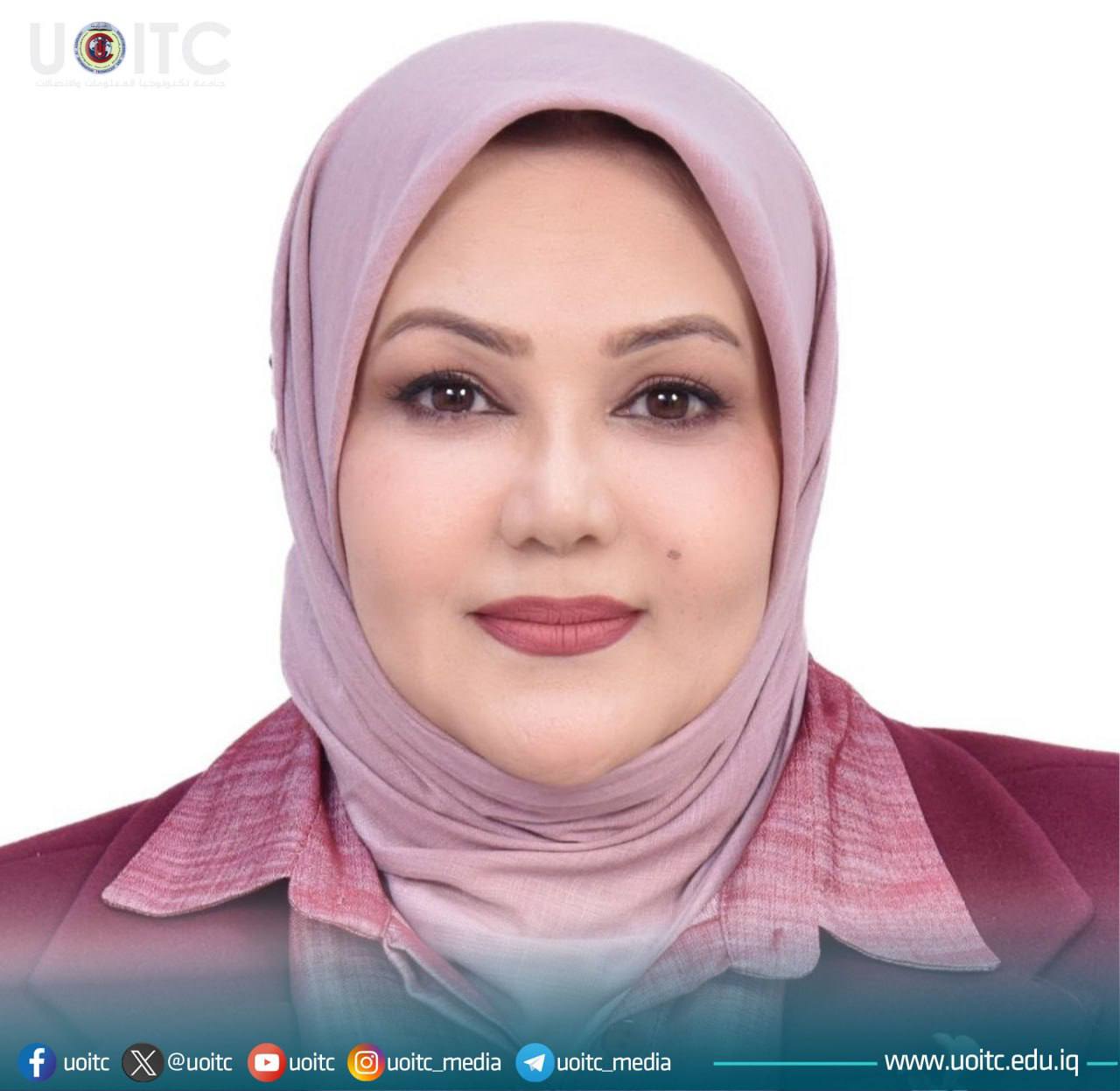
faculty member from the Biomedical Informatics College received a certificate of excellence in the field of scientific research evaluation
In an academic achievement that reflects the University of Information Technology and Communications’ keenness to develop the capabilities of its teaching staff and enhance its scientific presence at the regional and international levels, Dr. Mays Abdul Hadi Al-Sharqi, Head of the Bioinformatics Department at the Biomedical Informatics College, successfully passed the “Certified Peer Reviewer” course offered by the Academy of Researchers affiliated with Elsevier, the world’s leading scientific publishing institution.
Al-Sharqi received the Certificate of Excellence after completing all the training and specialized units of the course, which is one of the advanced academic programs aimed at qualifying researchers and academics to carry out the tasks of rigorous scientific evaluation of researches submitted for publication in international scientific journals.
This certification is particularly significant as it is issued by Elsevier, one of the world’s largest and most prestigious scientific publishers, and “Peer Review” is considered as a cornerstone of ensuring the quality of scientific research, as peer-reviewed journals rely on it to review and scrutinize researches before publication, and through this achievement, Dr. Mays Al-Sharqi has become a certified peer reviewer, possessing the necessary scientific and ethical skills to evaluate research according to internationally recognized standards.
This achievement contributes to enhancing the quality of the research process and raising the level of scientific rigor, as well as supporting the academic reputation of the college and the university, which is reflected positively on quality indicators and international university rankings, and enhances the university’s presence in the global scientific research environment.
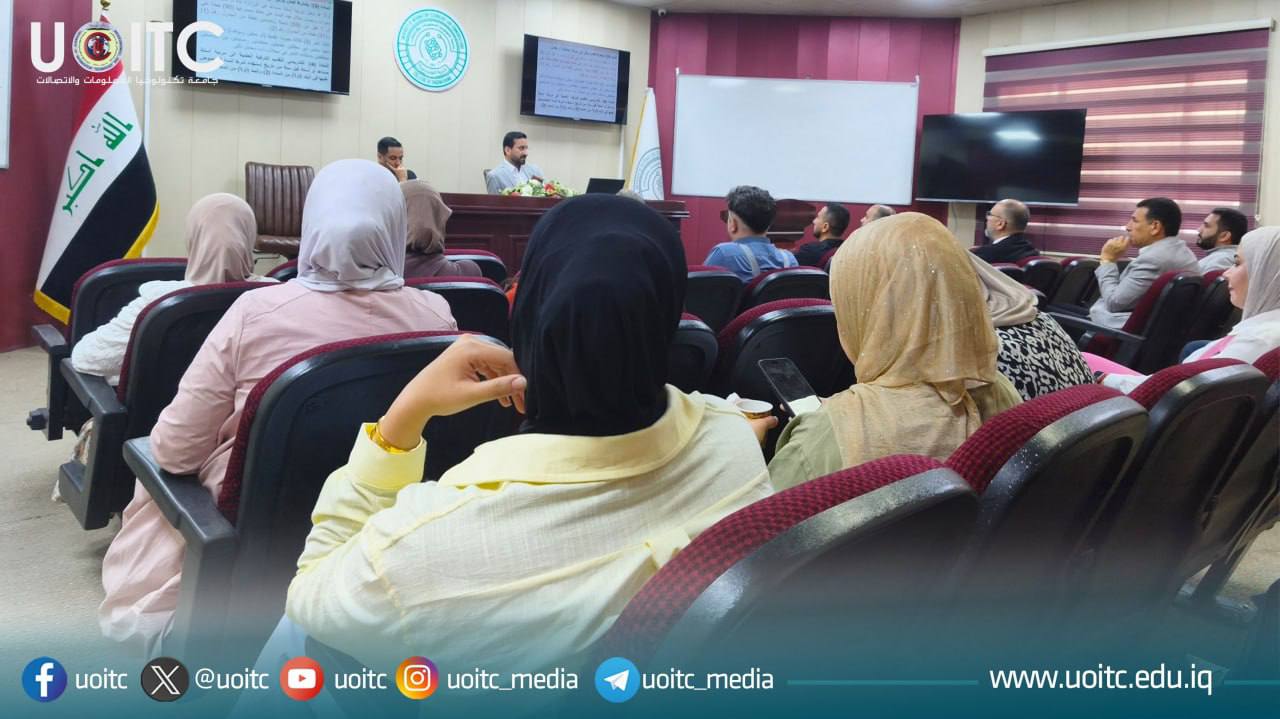
Seminar in Collage of Engineering on Academic Promotion: Procedures and Implementation Mechanisms
As part of efforts to enhance academic awareness and facilitate academic promotion procedures, the Scientific Affairs Division at the College of Engineering, University of Information Technology and Communications, organized a scientific seminar entitled “Academic Promotion: From Application Submission to the Release of the University Decree.”The seminar was delivered by the Assistant Dean for Scientific Affairs, Assistant Professor Dr. Ali Najdi, and the Secretary of the Subcommittee for Academic Promotions, Assistant Professor Dr. Ahmed Abbas Jassim. It was attended by a number of faculty members and individuals interested in academic affairs.
The seminar outlined the mechanisms and procedures of academic promotion, covering all stages from the submission of the application to the completion of requirements and the release of the university decree. It aimed to enhance faculty members’ understanding of the approved regulations and guidelines, enabling them to complete their promotion applications with greater efficiency and accuracy.The seminar also reviewed Academic Promotion Instructions No. (176) of 2017, in addition to the relevant ministerial directives and regulations. Furthermore, it highlighted the scientific and administrative aspects of preparing promotion files, as well as the mechanisms used to evaluate research outputs according to approved criteria.The speakers also clarified the most significant updates and procedures designed to facilitate the progress of promotion transactions and reduce potential obstacles that researchers may encounter throughout the process.
The seminar also addressed the key requirements that should be considered before applying for academic promotion, foremost among them the criteria for publishing in reputable scientific journals, the mechanisms for documenting research outputs, and the options available to faculty members for expediting the completion of their promotion applications in a manner consistent with quality standards and academic integrity.
The seminar featured discussions on the importance of promoting a culture of high-quality scientific publishing within higher education institutions and directing research efforts toward accredited
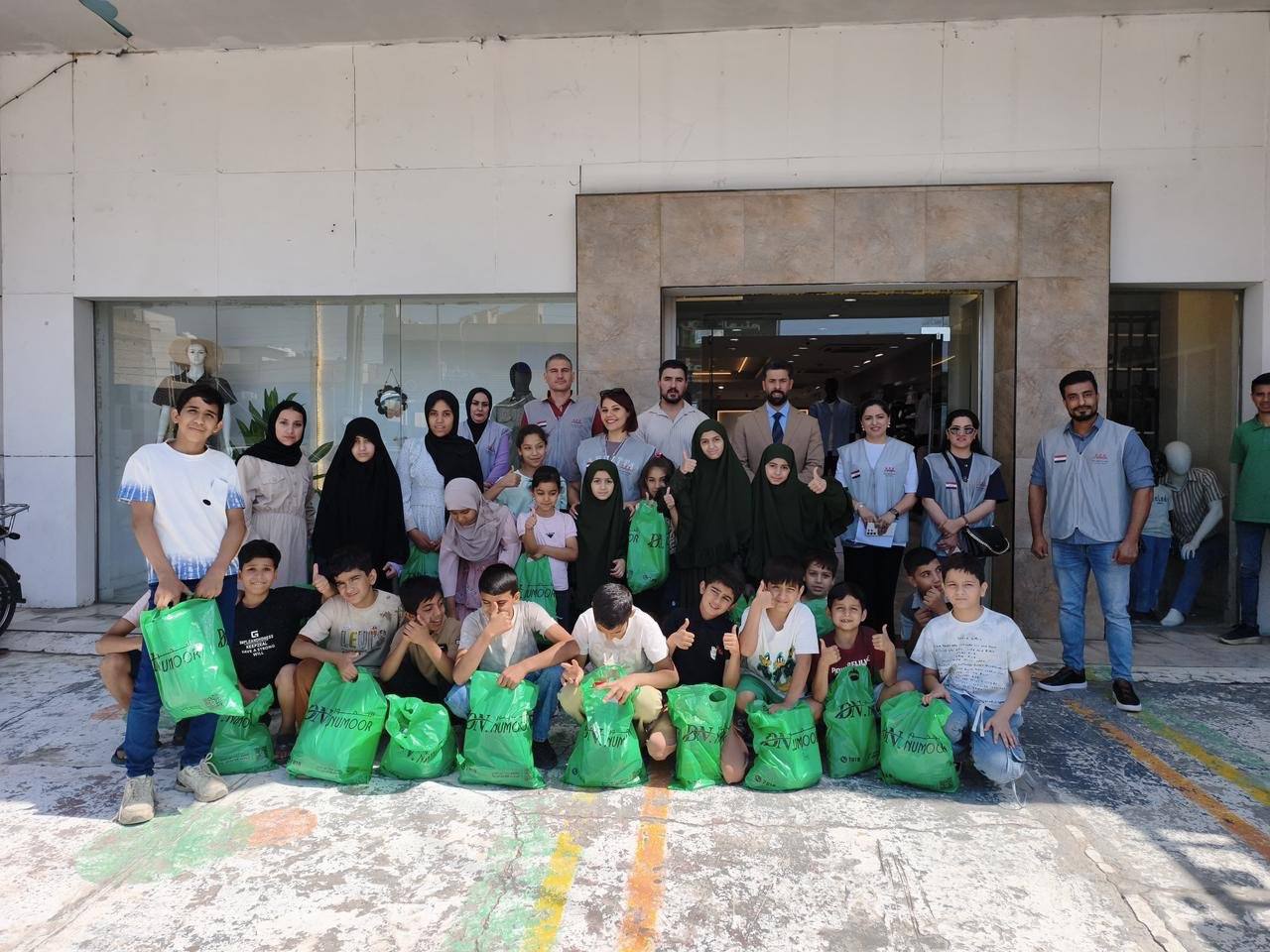
The University of Information Technology and Communications Organizes a Humanitarian Initiative to Provide Eid Clothing for Orphaned Children
Under the patronage of the President of the University of Information Technology and Communications, Professor Dr. Abbas Mohsen Al-Bakri, the Student Activities Department, in cooperation with the Electronic Computing Center, organized a humanitarian volunteer initiative entitled “Eid Clothing.” This initiative reflects the university’s commitment to strengthening its community role and instilling the values of solidarity and humanitarian work.
The initiative included a field visit with a number of orphaned children from the “Volunteer with Us” Relief and Development Foundation. During the visit, the children were taken to purchase Eid clothing in a warm and joyful atmosphere, bringing happiness to their hearts before the arrival of Eid al-Adha.
Several professors participated in the initiative, playing an active role in accompanying the children and ensuring their needs were met. They emphasized that this activity is part of a series of humanitarian events that the university is keen to implement in support of those in need and to promote a culture of volunteerism, given its positive impact on serving the community and reinforcing the values of compassion and solidarity.
The initiative was launched with the support and donations of a number of faculty, staff, and students of the university, aiming to show solidarity with this segment of society and to contribute to achieving the Sustainable Development Goals.
All Of US
Pages
- About Center of Continuing Education
- About Engineering
- About Us
- About_us_bic
- administrative Departments
- Archive
- Assistant Rector for Administrative Affairs
- Assistant Rector for Scientific Affairs
- Bioinformatics Department
- Business Informatic College
- Business Informatics college courses
- Business Informatics college News
- Campus
- Center for Continuing Education
- Center for Continuing Education News
- Citizens Affairs
- College of Biomedical Informatics
- College of Engineering
- College of Medical Courses
- College of Medical News
- Contact Us
- Contact Us
- Contact Us Form
- contact_us_bic
- contact_us_cec
- Courses
- Deans Of Colleges
- Department of Media and Government Communication
- departments_cec
- Download Center
- Electronic Computer Center
- Embed External Page
- Eng test
- Engineering Contact Us
- Engineering Courses
- Engineering Events
- Engineering News
- Engineering Students
- events_cec
- Fellowship Programs
- Goal 1: End poverty in all its forms everywhere
- Goal 10: Reduced Inequalities
- Goal 11: Sustainable Cities and Communities
- Goal 12: Responsible Consumption and Production
- Goal 13: Climate Action
- Goal 14: Life Below Water
- Goal 15: Life on Land
- Goal 16: Peace, Justice and Strong Institutions
- Goal 17: Partnerships for The Goals
- Goal 2: Zero Hunger
- Goal 3: Ensure healthy lives and promote well-being for all at all ages
- Goal 4: Quality Education
- Goal 5: Gender Equality
- Goal 6: Ensure access to water and sanitation for all
- Goal 7: Ensure access to affordable, reliable, sustainable and modern energy
- Goal 8: Decent Work and Economic Growth
- Goal 9: Industry, Innovation and Infrastructure
- intellgent media system
- Intelligent Medical Systems Department
- International Open Courses
- International Students
- ism department
- lastnews
- Latest News
- mc_EVENTS
- mc_Students
- Media and Documents
- Media and Documents ( Cloned )
- Media Technology and Communications Engineering Department
- Medical College Page
- Mobile Communications and Computing Engineering Department
- News
- Performance Evaluation Forms 2023-2024
- Post-Graduate of Engineering
- Presidency departments
- President of University
- Quality Assurance Archive
- Quality Assurance Department
- Related Websites
- Scholarships and Cultural Relations Department
- Scholarships for Foreign Students
- Scholarships for Foreign Students 2025- 2026
- Scientific Affairs Departments
- Services
- SiteMap
- statistics_cec
- Structural uoitc
- Supporting innovation by generating new ideas to enhance creativity and develop the institutional work of university staff
- Sustainability Website
- Technology incubator
- test10
- test100
- test11
- Test22
- University
- University and Community
- university and society
- University and Students
- University Council Secretariat
- University Home
- UoITC Rank
- Women’s Affairs
- الرئيسية 2